

Electric mobility and clean tech consulting firm JMK Research & Analytics has released a report showing that sales of electric passenger cars in India between April 1 and October 31 have already surpassed the total volume of sales in FY2026.
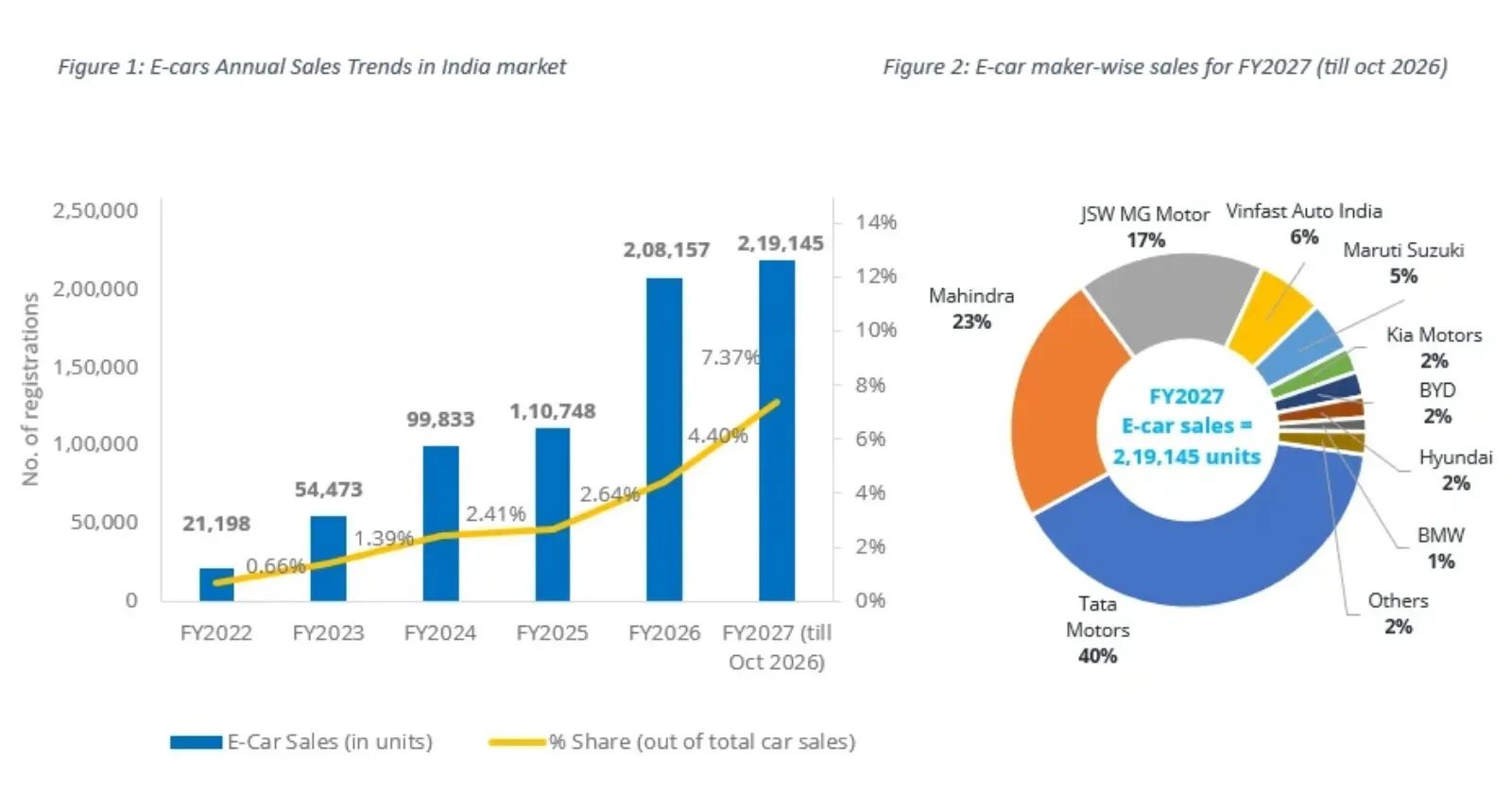
This shows a significant spike in demand for EVs across the country. The share of EVs in total sales rose from 0.66 percent in FY2022 to 4.4 percent share in FY2026, and had already reached 7.37 percent by the end of October 2026, with just over half the reporting period elapsed.
According to JMK Research’s review of Vahan database information, 2,19,145 electric cars were sold in the first seven months of FY2027 compared to 2,08,157 units in the whole of FY2026. This amounts to a five percent increase over the entire previous financial year’s total in just the year-to-date period of FY2027.
Electric passenger car sales in India amounted to 1,82,322 units in H1 2027, or 87.5 percent of the FY2026 total, indicating the scale of this surge in demand and setting the stage for a huge year-on-year increase by the end of FT2027. The additional 36,823 units sold in October alone significantly exceeds the 21,198 units sold in all of FY2022.
The research reports credits this increase over time to expanded options across categories and price points in the electric passenger car market, along with growing acceptance among potential buyers. Thirteen new electric cars were launched in India in the first half of this financial year, including models from Tata Motors, MG Motor, Kia, Mahindra, and BMW.
In the seven elapsed months of FY2027, Tata Motors led EV sales with 40 percent market share, followed by Mahindra & Mahindra with 23 percent, and JSW MG Motor with 17 percent. New player VinFast accounted for 6 percent of sales in FY2027 (till October 2026) with its all-electric lineup, while Maruti Suzuki’s first electric model, the e Vitara, established its market presence quickly, to achieve 5 percent market share. Kia, BYD, and Hyundai accounted for 2 percent each, while BMW managed 1 percent and all others combined amounted to 2 percent.
Another factor helping customers choose EVs has been affordability, with increasing awareness of Battery-as-a-Service (BaaS) purchasing options. Six of the 13 new models launched so far in FY2027 have a BaaS option, lowering their upfront cost and a monthly battery subscription.
Based on this trajectory, the report suggests that around 25 percent of passenger car sales in India could be EVs by FY2030, if there is a favourable regulatory environment.