


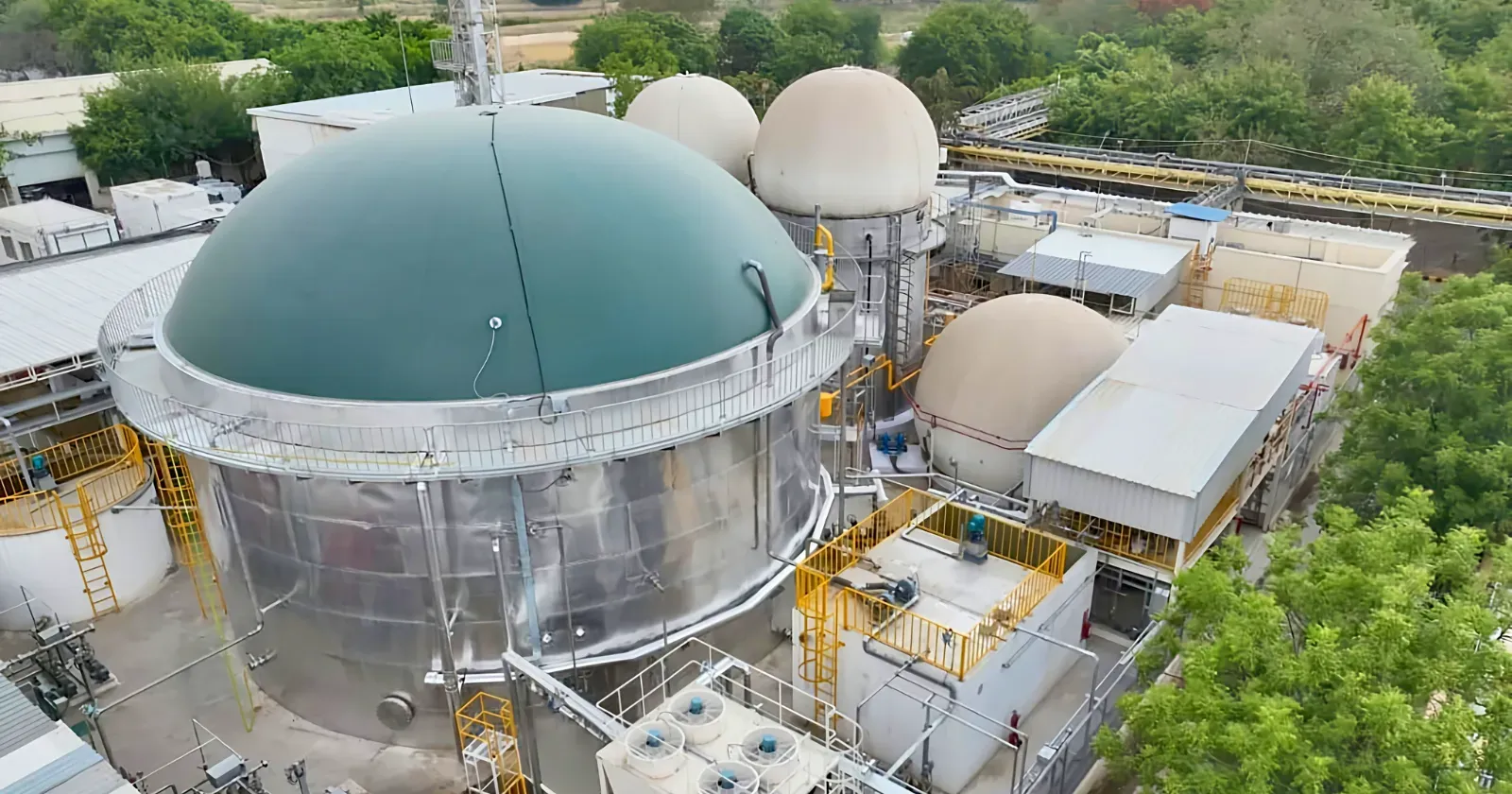
The carmaker's Manesar plant uses food waste, Napier grass and paddy straw as feedstock, processed through anaerobic digestion for biogas.
Maruti Suzuki India Limited on Friday announced it is expanding its biogas initiatives, on World Environment Day, outlining two projects designed to cut reliance on conventional fossil fuels across its manufacturing footprint. The first development centres on the Manesar facility, where the existing biogas plant has been upgraded from a capacity of 0.2 tonnes per day (TPD) to 0.7 TPD.
The expanded unit is expected to produce around 3.6 lakh standard cubic metres of biogas annually, translating into an estimated reduction of 664 tonnes of CO2 emissions each year. The plant uses food waste, Napier grass and paddy straw as feedstock, processed through anaerobic digestion. The resulting biogas is used for heating applications in the paint shop as well as for canteen operations. A secondary output, Fermented Organic Manure (FOM), is used within the company’s horticulture activities or returned to the agricultural ecosystem.
Also read: Maruti Suzuki Unveils India’s First Flex-Fuel Car
The second and more substantial project involves the construction of a 10 TPD biogas plant at the Kharkhoda facility, which is scheduled to be commissioned during FY 2026–27. Once fully operational, the plant is expected to offset 9,490 tonnes of CO₂ emissions annually and meet roughly 20 per cent of the facility’s total gas requirements, marking a significantly larger contribution than the Manesar unit.
Combined, the two projects represent an investment of ₹150 crore and form part of the company’s broader plan to allocate ₹925 crore towards green energy initiatives by FY 2030–31. In parallel, Maruti Suzuki continues to expand its renewable energy portfolio through solar power, with installed capacity currently at 79 MWp and a target of reaching the equivalent of 319 MWp within the same timeframe.
These developments follow a similar transition at the Hansalpur facility, where biogas has already replaced natural gas for approximately 10 per cent of energy consumption. The company noted that this shift has helped sustain operations during periods of LNG supply disruption.