

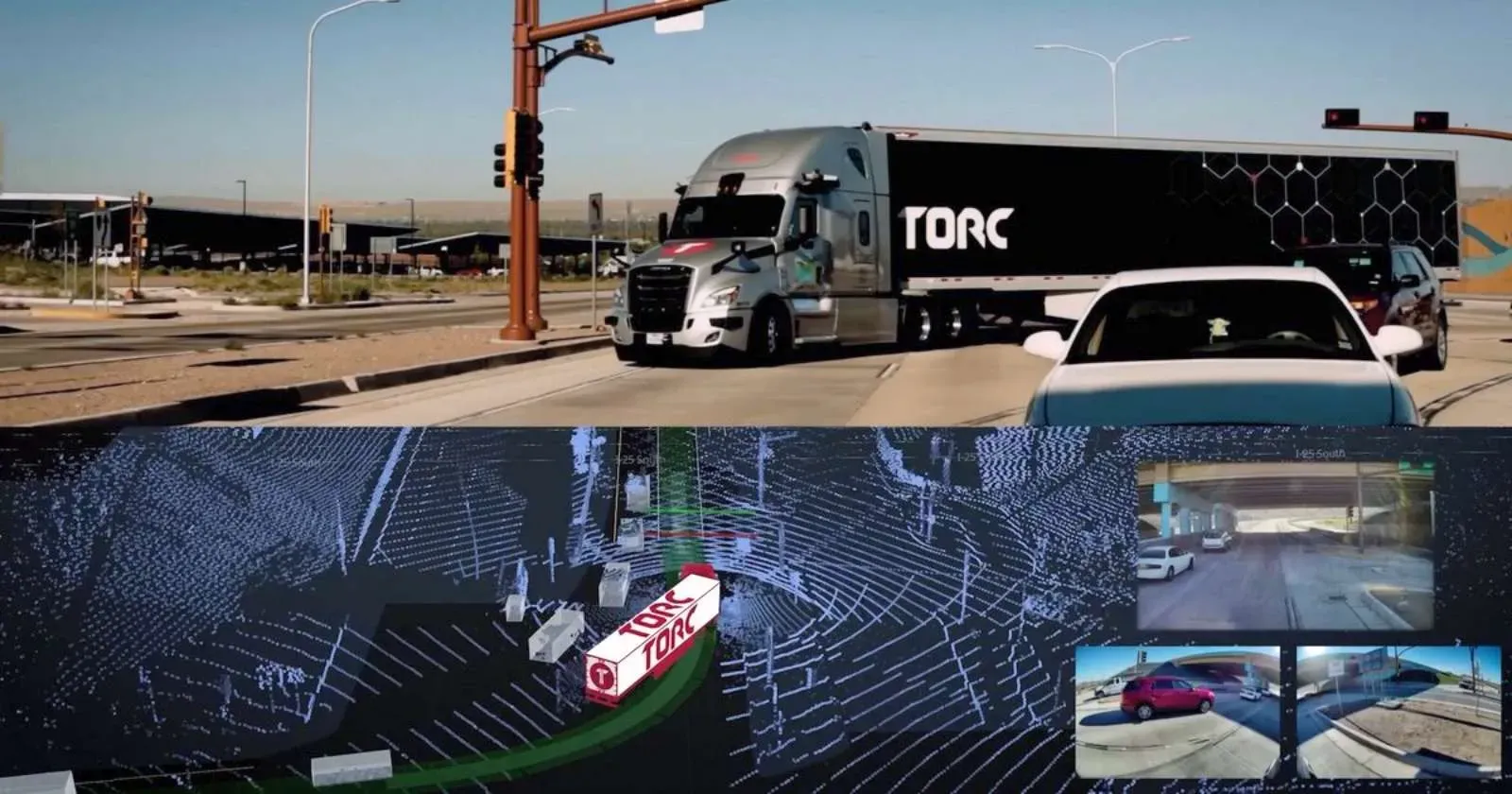
Autonomous commercial vehicles will soon be commonplace in many parts of the world. (Image credit: Daimler Truck)
Our vehicles are a huge source of information about us – where we live, how we travel, what we choose to spend money on – and manufacturers have been collecting tonnes of data for a while now. Across the passenger and commercial transportation industries, this data is not only shaping the way future products are developed, but also playing into decisions about urban planning, global trade, and sustainability.
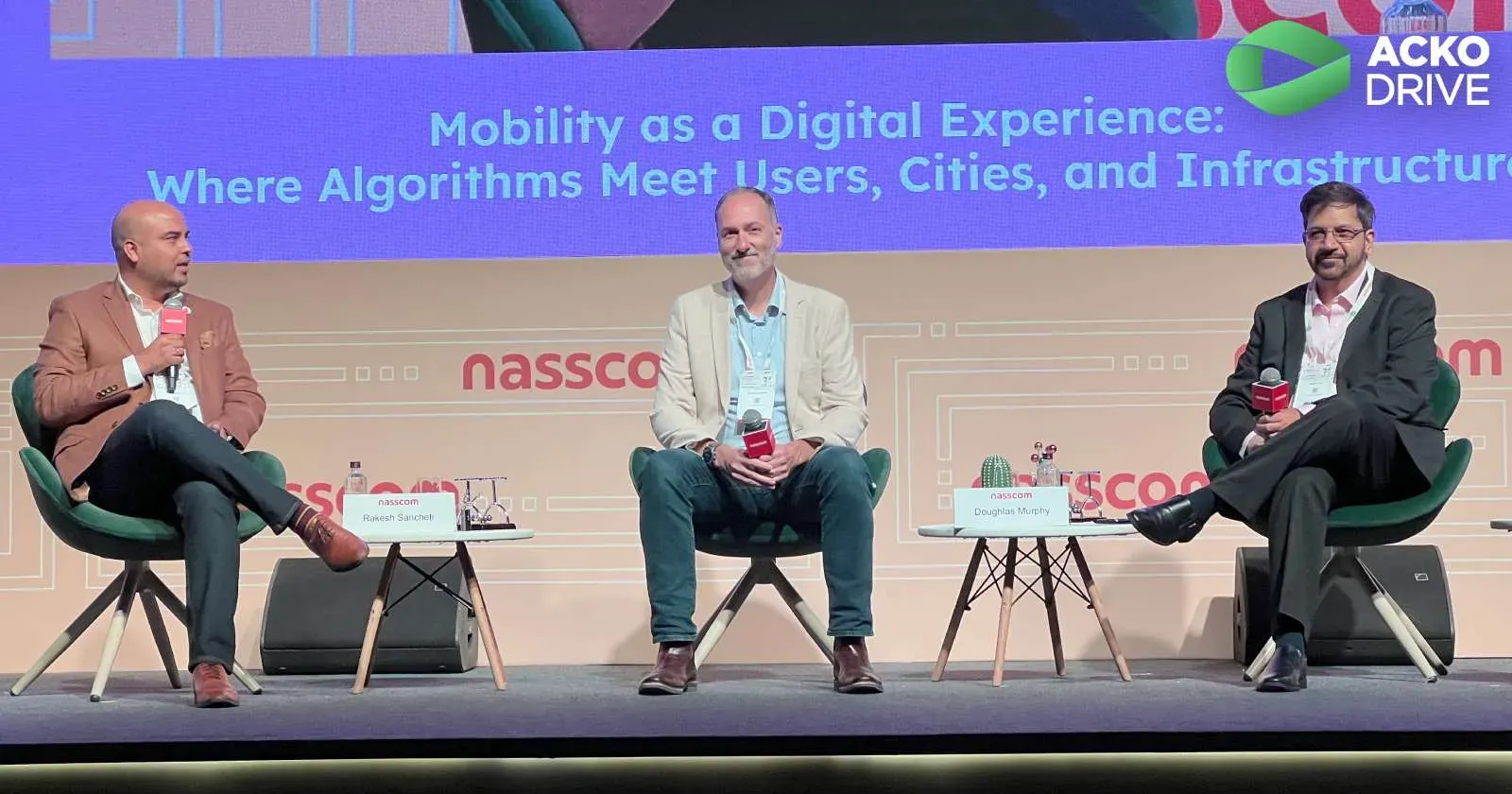
ACKO Drive recently attended a roundtable discussion at Nasscom’s 2026 Leadership and Technology Forum, which touched on all these topics to throw light on how the automotive industry is evolving to adopt AI, actively collecting and managing massive amounts of data. Beyond the usual topics of customer experiences with cars and bikes, we got to hear about how the commercial vehicle sector is using these tools on a global scale.
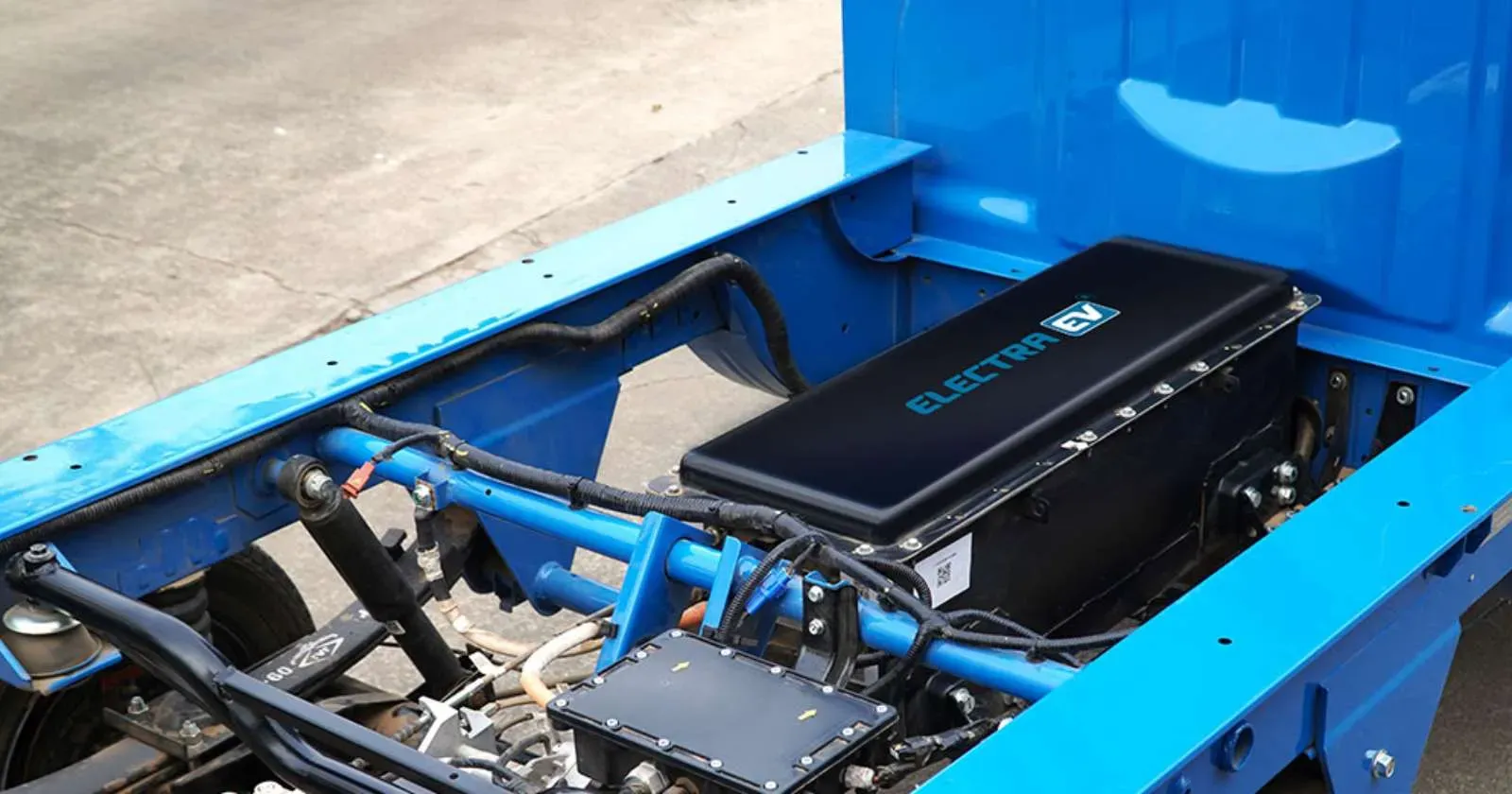
On the panel were Douglas Murphy, VP and Head of Data and AI, Daimler Truck Innovation Centre, India whose work involves building and scaling AI-driven capabilities to power future intelligent mobility, and Samir Yajnik, CEO & Executive Director, Electrodrive Powertrain Solutions (Electra EV), who has over 35 years of experience across the automotive, aerospace, and heavy engineering sectors. The session was moderated by Rakesh Sancheti, Chief Growth Officer & Chief Business Officer, Manufacturing, Tredence, a data science solutions provider.
Here’s what they had to say:
Is range anxiety still relevant?
Samir Yajnik: I'll give you some data points. First of all, in city life, use EVs! Please go buy one immediately, because there's absolutely no reason for range anxiety. When we started our business in 2017, real-life range used to be less than 200 km, and today we’re at 500 km. But this is where this becomes interesting. In Bangalore, there are X number of public charging stations but they are only used 25 percent. If you look at Mumbai, half the number of charging stations are only used 10 percent. What does that tell you? Users have increased the number of charging points at their home by 350 percent in Mumbai. Basically, we have enough juice in our vehicles to charge at home. We don't need public charging stations. And yet when we consider fleets, we need them all the time. So [the situation] is going to improve and increase utilisation. But there is no range anxiety. Really today, from a personal mobility point of view, there's no range anxiety. It's nonsense.
Experiences from international markets that reflect in India
Douglas Murphy: We have an incredible battery electric portfolio across the world, not yet in India, but it's coming. The Bharat Benz brand will be introducing EVs soon. It’s about finding the pace that matches what our customers need and what fits in the region. We talk a lot about range anxiety as well, and we’re doing a lot of really cool work to try to predetermine exact life cycles.
A fun story I have from many conversations about this is that many of our customers and drivers call from the roadside, saying the truck has stopped — a fuel-driven truck.And the reason for the roadside breakdown is that they ran out of fuel. We have already a very good range predictor there — the fuel gauge that tells you when you're out! Yet still, it happens. This is a human behaviour topic, right? So it's not all about the algorithm and the electronics, and the battery life or fuel [capacity]. It's about how you report to this human driver what to do at exactly the right time, because they have a schedule. They're trying to get their goods delivered or their job done, and there's pressure. So it's a very interesting problem.
Capturing data for personalisation and product development
Douglas Murphy: This is something that I spend the majority of my time on. It's a really exciting, but also important problem for us. I used to think that this was a one-time job, oh, let's get all this great data together and then we'll be able to do all kinds of things with it. But what's fascinated me over the years is that the data sources continue to grow. Everybody knows that modern vehicles like ours are collecting telematics data in real time as they drive down the road, but even that continues to grow. First, it was just powertrain diagnostics and fault codes coming off of the vehicle. Now we're collecting driver inputs, and external inputs such as temperature and drive time information. We're collecting onboard video, and every year we seem to find something else interesting to tap into, new sensors to put on, new signals to pick up.
So, one of the things we're proud of is that we handle all this data very carefully. We have agreements with the majority of our customers to collect this data and use it for further product development. And then once we bring it on our side to work with, then we match it up with anything else we know about that vehicle, what its purpose was, when it was built.
Our products are extremely complex. Unlike when you order a passenger vehicle and you have maybe 5–10 options to choose from within the model line, our products are vastly more configurable and complex, fine-tuned for exactly the job that our customers need them for. Our premium products have over 300 customer options. Everything from the length of the vehicle, to the size of the engine, the transmission, the size of the stacks, all kinds of stuff.
So that itself becomes an input. It tells us what the vehicle's purpose is. We know, increasingly, the individual behaviour of major components on the vehicle. We have streaming data from the live drive time. And then anything we pick up from other touchpoints with that vehicle and with that customer.
So if they come into a dealership for service or repair, we capture that. Over time, we can see patterns, and how vehicles perform, which components wear and tear at different rates, and all the different conditions.
It's a never-ending challenge, constantly trying to manage and curate this data in a way that we can draw insights from it. If I had 100,000 instances of the same truck in the same conditions doing the same things, my team in Bangalore could build a learning model, probably in a week, but there’s an incredible variability in conditions and configurations. So the use cases we're trying to solve for our customers are never-ending, but a fun challenge for us.
Using customer data to build sustainable, efficient systems
Samir Yajnik: We are involved in the fleet business in a big way, both personal as well as last-mile pickup trucks. And these desperately need very, very high uptime. We're talking about 99.9 percent uptime, because it's people's livelihoods and also getting goods to the right place at the right time. Initially, if something went wrong, we’d actually go take a dongle, collect the data, and then try to figure it out, and that was not giving us the kind of uptime needed.
So we spent the last two years actually building what I like to refer to as a learning energy platform. It's a battery management system, but with redesigned hardware. We've got AI at the edge. We don't use a cloud because it’s expensive and there’s latency. Embedded AI uses a lot of data, and the most important thing it learns, because we are in the power trade business, is the efficiency of energy utilisation for maximising range.
We've actually improved, besides giving 99.9 percent uptime, by providing the service guys the right data at the right time. We're talking about at least a 6 to 8 percent improvement in real-life range. We're talking about a 15 percent improvement in battery life. You need to be able to predict where things will go wrong.
We also take real-life data about how the driver is driving – aggressive, efficient mild — and use that data to drive other control systems, such as recovering energy, by regenerative braking. Essentially, it is an embedded learning system that's using huge amounts of data to improve efficiency, predictability, and serviceability of the fleet.
Douglas Murphy: Uptime is incredibly important to our customers too. Giving them lead time on action is, I think, the coolest but also the most difficult challenge. What we're trying to do with all this data is give them ample time to know that they need to take that vehicle in for service and repair, and anticipate which replacement parts they will need. That feeds into our entire supply chain of spare parts. Our goal is that customers buy those parts from us, and have their vehicle serviced at our dealerships. And ultimately, we even want to be able to recommend their next configuration, looking at how they've been using their vehicle. Is it optimum for their use case? Our recommendations could help them run their business more efficiently.
What the future holds for autonomous vehicles
Douglas Murphy: That’s tough. I know everyone's interested in it. We're definitely pushing ahead on autonomous driving for commercial vehicles. It’s a very different situation from passenger cars. Most of our effort right now is happening in North America. A few years back, we procured a company called Torc Robotics, and that's the centre of development for autonomous for us. We believe we're in the lead on this in a way that really meets customer needs, not some glorified vision of what could be an autonomous truck. I've seen these things. They're running. If you ever happen to be in Albuquerque, New Mexico, you could see our trucks doing live test drives up and down the highway there. I think there's a strong business case for it in certain markets, and we'll see what happens!
Samir Yajnik: I offer a slightly different perspective because we make products for India, and export from India out to the world as well. We do three-wheelers and four-wheelers; commercial and passenger; trucks and buses. Guess where autonomous is becoming most commonly used? It's the tractor industry. I’ve learnt from speaking to our customers that agro autonomy is becoming so important in Europe and even in India, because the yield level of our crops is low. In the west, you can have an autonomous tractor and it'll charge itself, even that takes, say, three hours. It'll know where to go, when to do what it needs to do and come back, even depending on the weather.
Now, in India, believe it or not, there are many applications being looked at for autonomous agricultural vehicles. It’s a really important use case. Another example is mining where people can't go, or it’s dangerous for people to go, so people are looking at autonomous. Tractor [export] from India is a multi-billion dollar business, but there's a huge disruption happening right now, and autonomous and robot-driven tractors are the only way to go.
Choosing India for a Global Capability Centre
Douglas Murphy: I've been [in India] for two years now, and each day my decision to come here is reinforced by the experience I have working with the team. We're an old-style industrial manufacturing company. We are very good at building trucks and buses, but AI and data analytics moves at a whole different pace. It doesn't fully fit with our normal way of operating, especially with such a huge distributed company all over the world. So, pace is what we get here. My team in Bangalore, they're phenomenally innovative, inventive, they try things fast, they fail fast, they get up and try again! There's a way of working here; a motivation to try things out, develop and innovate that is different from what we have in our other locations. And I think it's a great compliment to the way we work. Sometimes there's friction, but I think it's just been tremendous for us to build out the centre here. We were one of the very first GCCs in Whitefield about 20 years ago. And it’s not only technology and AI, my counterparts lead engineering, digital development of our actual products and components, and digital validation. We do embedded software development, and I see it only growing in the future. We have tremendous capability there. It's been great.
Responses have been edited and condensed for clarity.