
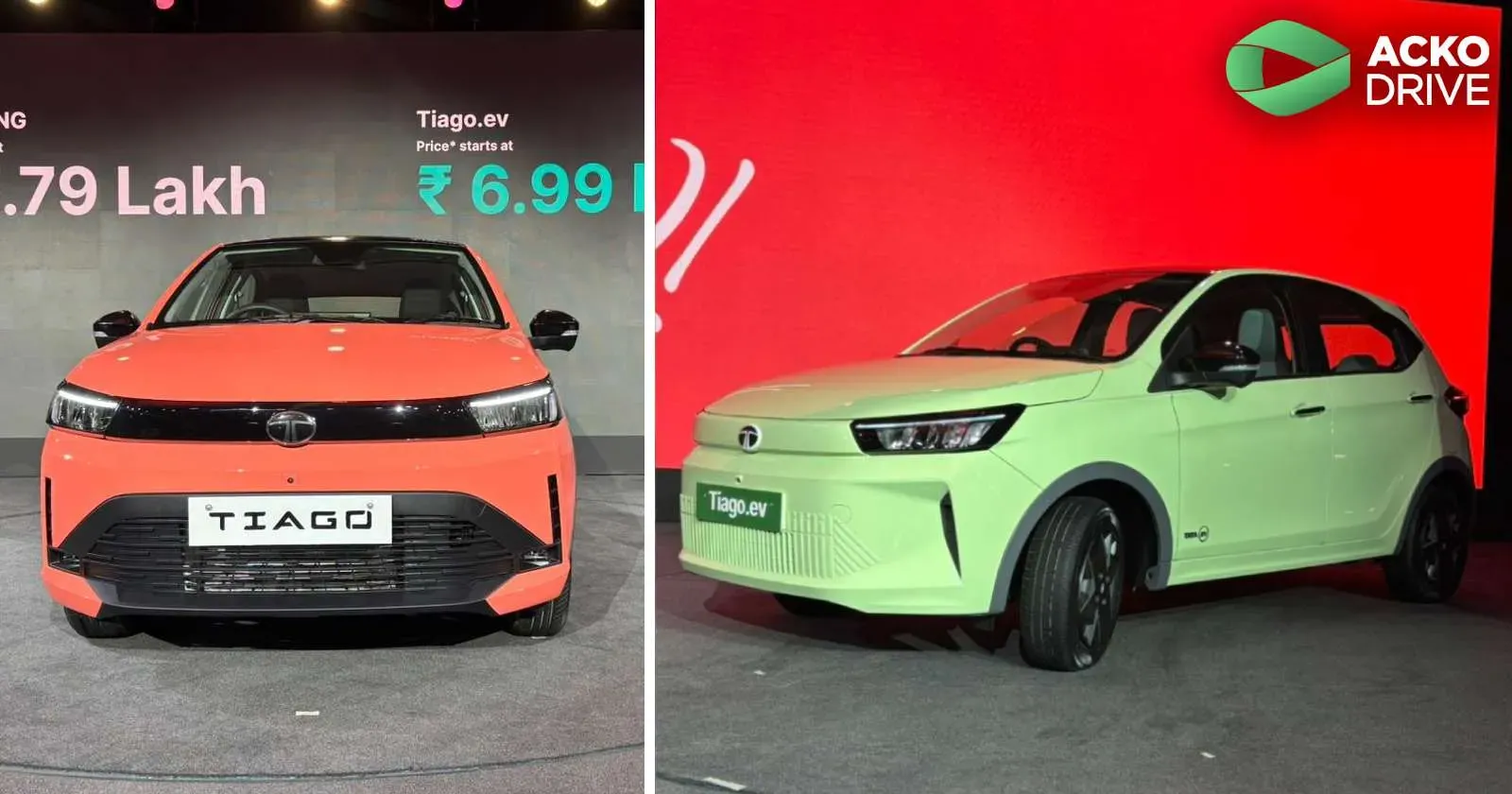
Pricing starts at ₹4.69 lakh for the new Tiago (petrol) and ₹5.79 lakh for the Tiago iCNG. The Tiago EV starts at ₹6.99 lakhs or ₹4.69 lakhs with the BaaS option.

Share Post

Pricing starts at ₹4.69 lakh for the new Tiago (petrol) and ₹5.79 lakh for the Tiago iCNG. The Tiago EV starts at ₹6.99 lakhs or ₹4.69 lakhs with the BaaS option.
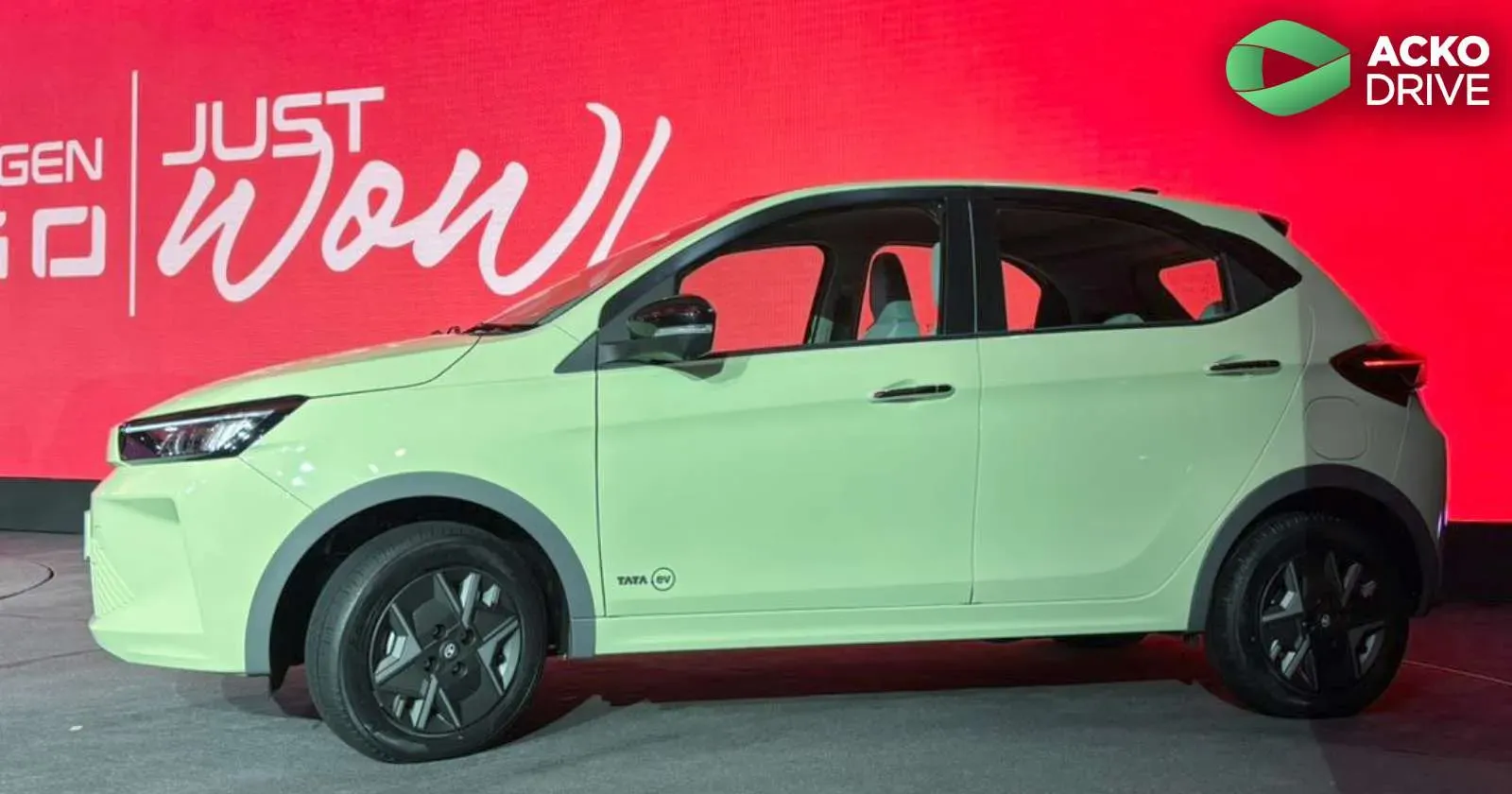
The third facelift of the Tata Tiago has just been launched, ten years after the debut of the original. With 7 lakh units sold in that time, Tata now says the updated Tiago rejects the usual compromises in terms of safety, tech, features, and comfort that buyers in this segment have to deal with. The company recently previewed the new Tiago’s bold design, and is now offering this entry-level hatchback with some interesting new features.
Along with this model, the Tiago EV has also been refreshed, targeting the high-growth entry-level EV segment. With 75,000 existing Tiago EV owners, the median customer drives 49km per day on predictable routes, and 35 percent drive intercity. Tata says 72 percent of owners use their Tiago EV as their primary car.
Pricing starts at ₹4.69 lakh for the new Tiago (petrol) and ₹5.79 lakh for the Tiago iCNG. The Tiago EV starts at ₹6.99 lakhs but can also be had for ₹4.69 lakhs plus ₹2.6 per km with a Battery-as-a-Service (BaaS) option (private buyers only). All prices are introductory and ex-showroom Delhi.
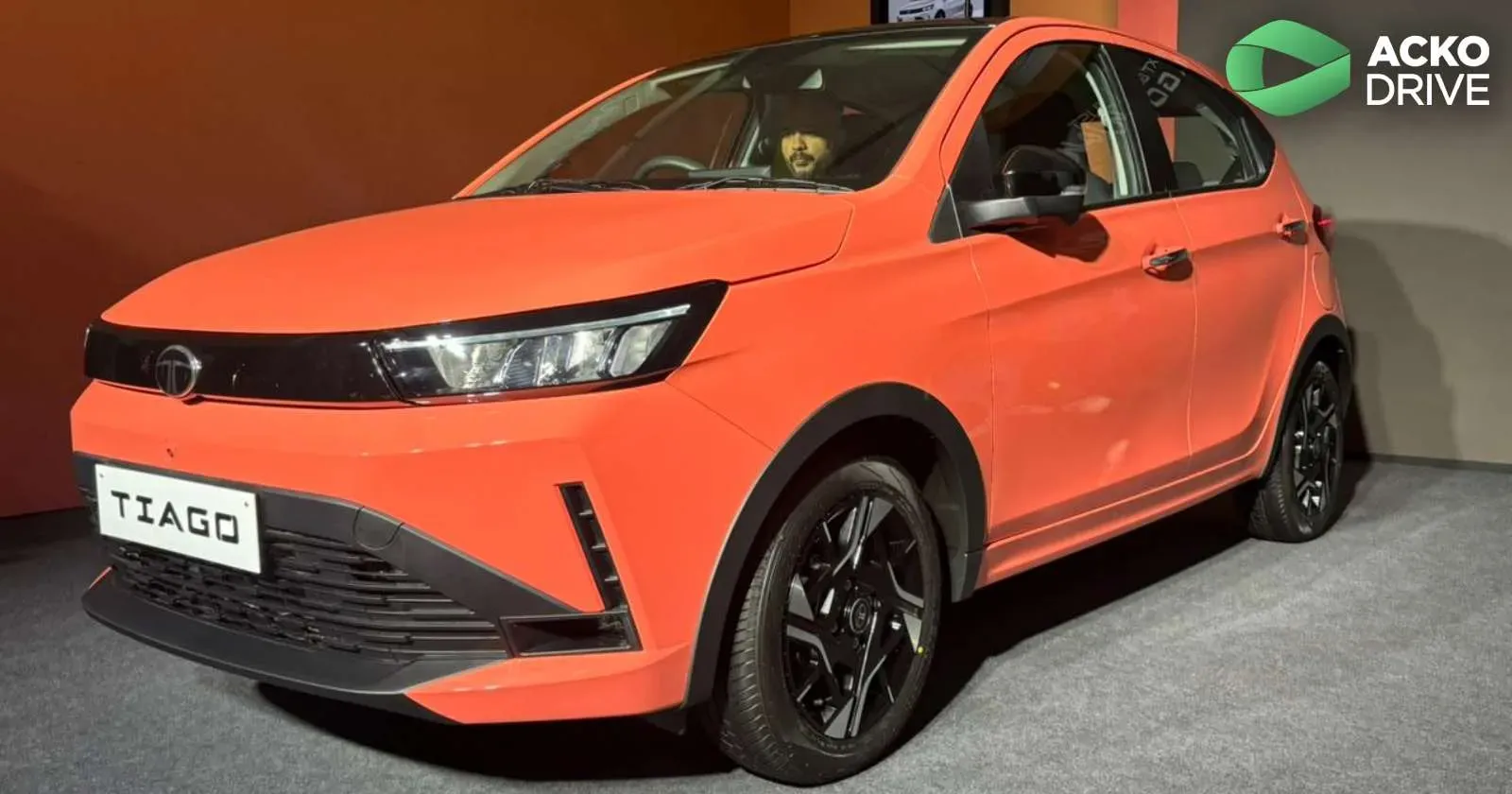
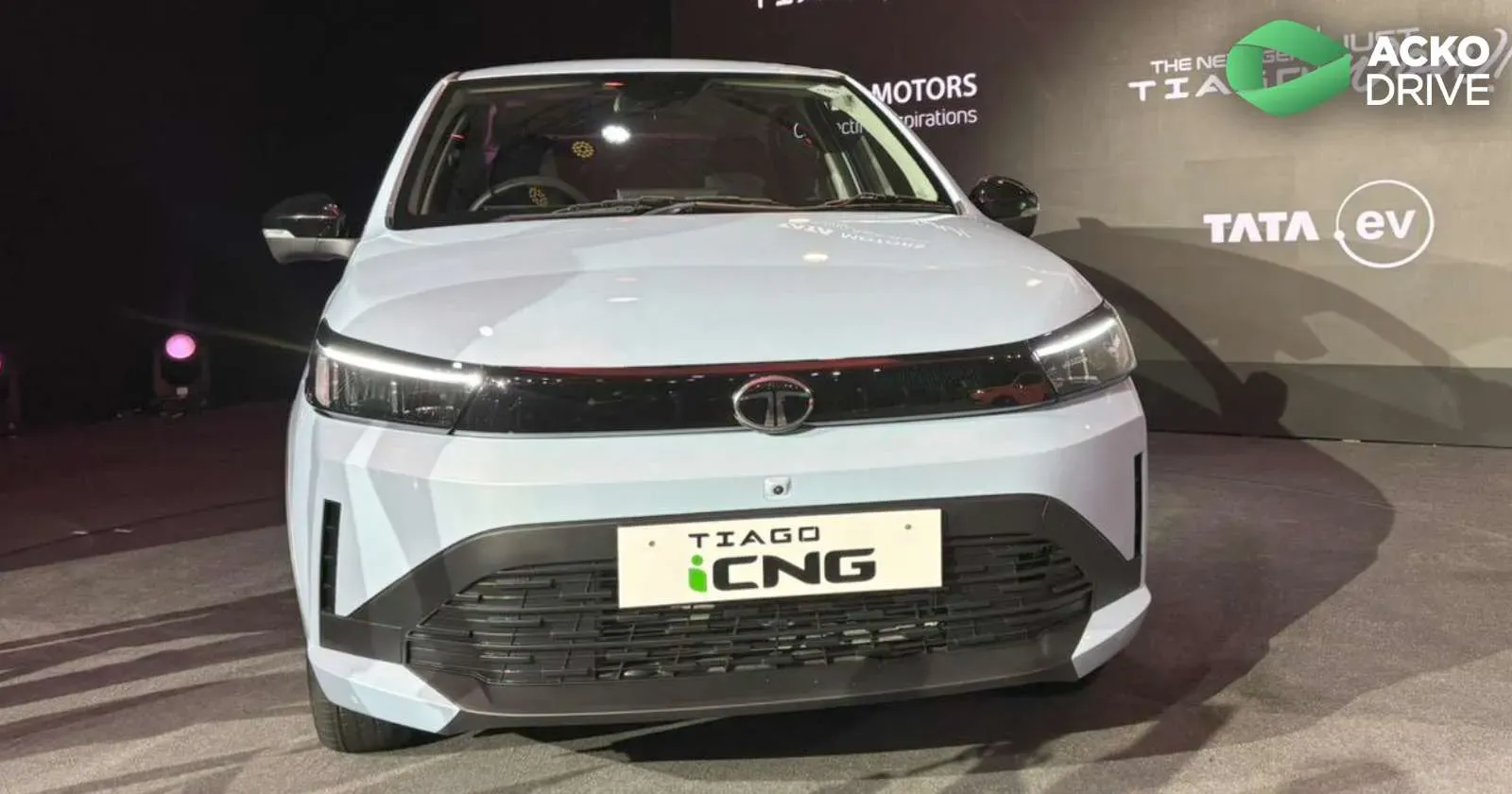
Both new versions of the Tiago now have sleeker LED headlamps with sharper, eyebrow-like daytime running lights and LED foglamps. The front grille is larger on the ICE model, while the Tiago EV stands out with a closed, body-coloured panel. The ICE version gets R15 diamond-cut alloy wheels, while the Tiago EV comes with aero-optimised ones. The front and rear bumpers have also been redesigned. At the back, there are new slimmer LED taillamps with a non-illuminated black strip connecting them visually.
On the inside. Tata Motors has done a lot to make this budget hatchback feel like its more premium siblings. The cabin is now a lighter grey, with some glossy black touches. The dashboard has a much more modern look, with a soft-touch “fabrica luxe” finish. There’s a floating 10.25-inch infotainment touchscreen and a new standalone digital instrument cluster with industry-first support for Bluetooth phone connectivity for call and media display.
Much like other recent models, you get Tata’s two-spoke steering wheel. The electric model has an offset, illuminated Tata EV logo on the steering wheel. There are physical AC controls and a new rotary gear selector for automatic variants.
Cabin interior space and seat comfort have also been improved. Tata Motors claims a multi-generation leap for its infotainment system with 2.3X better compute performance and 1.4X more powerful graphics. Over 35 connected-car features include remote commands, tracking, emergency assistance, vehicle usage insights, and personalisation. Apple CarPlay and Android Auto are supported. The company also promises usable boot space with the CNG kit installed.
Both models are available in six colours – Sobo Surge, Pangong Pulse, Pristine White, Pure Grey, and Daytona Grey are common, while the ICE Tiago also comes in Varanasi Vibrance, and the Tiago EV has an exclusive Dehradun Dew option.

In terms of features, buyers of the top-end variants can also get 360-degree HD cameras, auto-folding ORVMs, rear AC vents, front and rear 65W USB Type-C ports, and a wireless phone charger.
Safety is also bumped up with 90+ active and passive features including six airbags standard, SUV-level rigidity with a 360-degree impact protection body frame, ABS with EBD, ESP with traction control, cornering stability control, hill hold assist, roll-over mitigation, automatic blind-spot monitoring, rain-sensing wipers, auto demisting, and alerts for approaching vehicles.
Under the hood, the Tiago petrol and CNG use the same 1.2-litre engine as before, so you get 85 bhp with the petrol option and 75 bhp with CNG. The CNG version uses a dual-cylinder factory-fitted kit. Interestingly, it is now also available with AMT, and gets paddle shifters as well, which are both segment-first options in India. Suspension has been tuned for Indian driving conditions, and ground geometry also optimised.
The Tiago EV gets more significant updates, particularly its new electric drivetrain and battery options. There’s a 24kWh long-range battery pack which can be charged 40 percent faster, allowing for 100km of range after 18 minutes of charging. The other option is a 19.2kW medium-range battery. Tata Motors will also offer a lifetime unlimited-km battery warranty for each car’s first registered owner.
Charging speed is 30kW (DC), 7.2kW with a wall charger, or 3.3kW for broad compatibility. Based on usage patterns, Tata says 60 percent of Tiago EV owners will only need to charge once a week, and 90 percent will be fine with charging twice a week.

The new Tiago is available in multiple variants, which Tata Motors calls “personas”. The base Smart persona has a digital instrument cluster, six airbags, tilt-adjustable steering, reverse parking sensors, manual AC.
The Pure persona adds Bluetooth to the instrument cluster, all four power windows, steering-mounted audio controls, electronically adjustable ORVMs with turn indicators, a height-adjustable driver’s seat, follow-me-home headlights, rear defogger, body-coloured door handles, and more.
The Creative persona also gets 360-degree HD cameras, blind view monitoring, a cooled glovebox, LED DRLs, auto-fold ORVMs, and the 10.25-inch infotainment touchscreen. Creative+ adds a wireless phone charger, 65W USB Type-C ports, LED fog lamps, and connected-car features.
The Tiago EV is available in Smart 19, Pure+ 19/24, and Creative+ 24 trims.
The new Tata Tiago will compete with other budget-friendly hatchbacks such as the Maruti Suzuki WagonR and Swift, the Hyundai Grand i10 Nios, and Citroën C3. The Tiago EV is in an interesting position with the Citroën eC3, MG Comet, and Tata’s own Punch EV and Tigor EV as potential alternatives.
Tesla App Update Hints at Possible Upcoming Face Recognition Check to Use FSD
Jamshed Avari 3 Jul, 2026, 9:20 AM IST
Keeway Hypevolt-R E-Scooter Launched In India With Blind Spot Detection, Reverse Camera, Priced at ₹1.99 Lakh
Sameer Fayaz Contractor 3 Jul, 2026, 8:54 AM IST
Yamaha R2 India Launch Expected in August, 2026
Arun Mohan Nadar 3 Jul, 2026, 8:19 AM IST
GST on Rapido, Bharat Taxi Subscription Model Could Hurt Driver Earnings, Demand
Krishna SinhaChaudhury 3 Jul, 2026, 8:11 AM IST
Yezdi Scrambler Set to Debut on Amazon India During Prime Day 2026
Tushaar Singh Gill 3 Jul, 2026, 7:27 AM IST
Looking for a new car?
We promise the best car deals and earliest delivery!