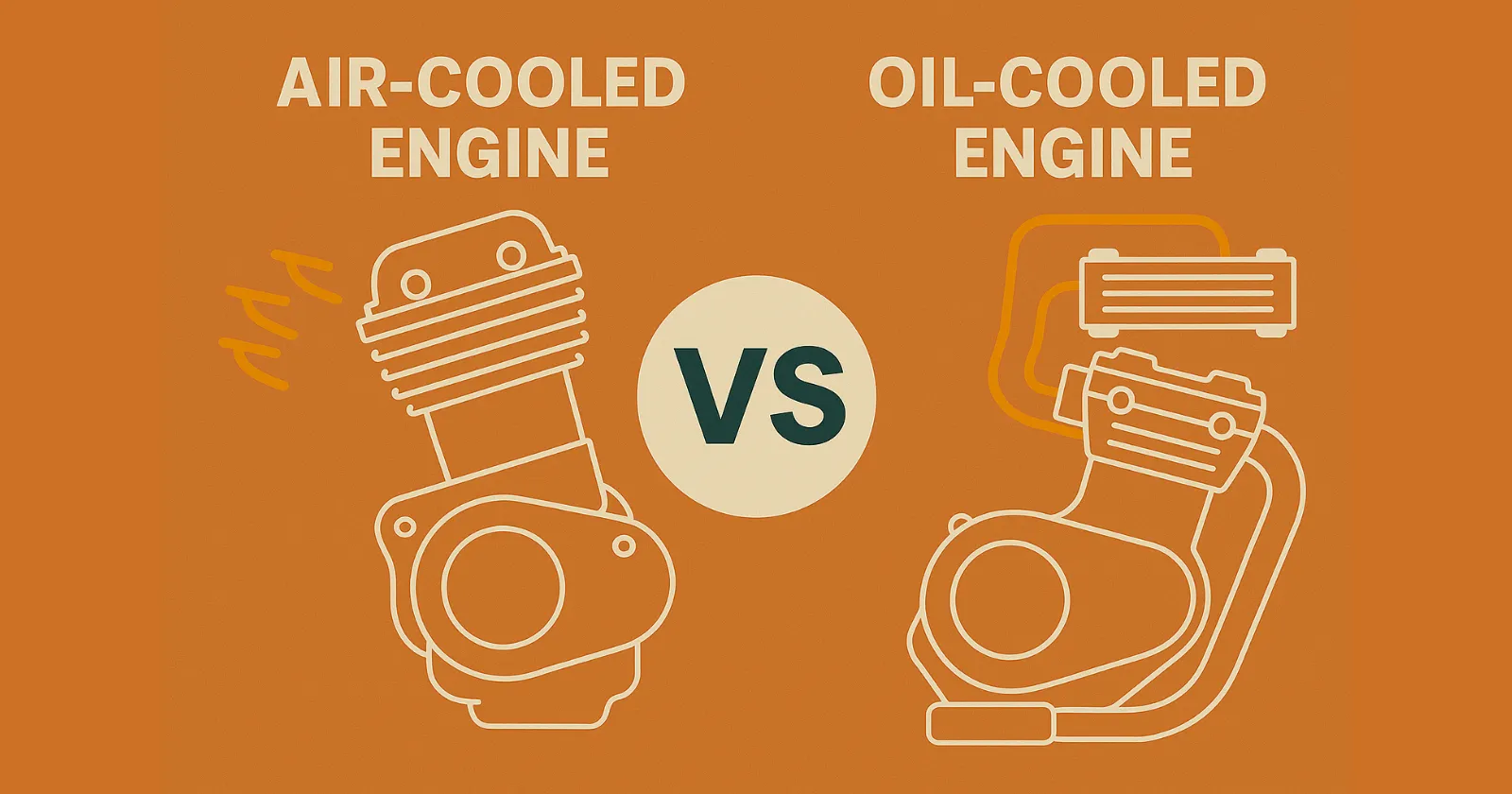
What is Air-Cooling in Bikes?
Air-cooling is the simplest method used to keep a bike’s engine from overheating. In this system, the engine has metal fins on its surface. As you ride, the air flows over these fins and carries away the heat. The faster you ride, the more air passes over the engine, and the better the cooling. This system doesn’t require any liquid coolant or pumps, which makes it cheaper and easier to maintain. However, in slow traffic or during extremely hot weather, air-cooling may struggle to keep the engine temperature low.
What is Oil-Cooling in Bikes?
Oil-cooling is a more advanced system where the bike uses its engine oil not only for lubrication but also for cooling. In this method, the hot oil from the engine is sent through an oil cooler, which works like a small radiator. As air passes over the oil cooler, the oil temperature drops before it goes back into the engine. This system offers better cooling than air alone, especially in slow-moving traffic and hot climates. However, it still depends on airflow, so it might not be as effective as liquid-cooling for extreme riding conditions.
Difference between Air and Oil Cooling
| Feature | Air Cooling | Oil Cooling |
| Cooling Medium | Flowing air | Engine oil |
| Components Used | Cooling fins on the engine | Engine oil + small oil cooler |
| Cooling Efficiency | Basic (suitable for normal riding) | Better (suitable for longer or faster rides) |
| Maintenance | Very low maintenance | Requires timely oil changes |
| Cost | Cheaper | Slightly more expensive |
| Common In | Entry-level and commuter bikes | Mid-range bikes |
| Suitable For | Short rides, city use | Highway, hilly, or hot weather rides |
Pros and Cons of Air-Cooled Bikes
These types of bikes depend on the air that passes through the fins of the engine in order to carry away the heat. In air-cooled bikes, no pumps or any additional fluids are involved.
Pros:
- They feature a simple design.
- They are ideal for people who are on a low budget. These bikes need less maintenance.
- Air-cooled bikes are effective at slower speeds only if the rider rides them on a daily basis.
- These are very reliable, because they contain a few parts which can fail or leak.
Cons:
- They are less efficient under slow traffic.
- During long rides, the engine can get hotter because air cooling doesn’t always remove heat fast enough.
- In very hot weather, the engine may face more pressure, which can reduce its life over time.
- The engine sounds louder as there’s no liquid to absorb the noise and vibration.
Pros and Cons of Oil-Cooled Bikes
Oil-cooled bikes use engine oil to do two things at once. It keeps the engine parts moving smoothly and helps cool the engine. The oil passes through a small cooler (like a mini radiator), where it cools down before going back into the engine.
Pros:
- The same oil keeps the engine working smoothly and cool.
- It cools the engine better than just air, especially in slow-moving traffic.
- These bikes are simple, light, and don’t cost much to maintain.
- Works well in hot weather and busy traffic without needing special coolant.
Cons:
- On long rides or at very high speeds, oil cooling may not cool the engine enough.
- If you don’t change the oil on time, or if there’s not enough air, the engine can get too hot.
Air-Cooled vs Oil-Cooled Bikes: Which One Should You Pick?
Not sure whether to choose an air-cooled or oil-cooled bike? Here's a breakdown based on how and where you ride.
1. If You Ride in the City Every Day or Take Short Trips (Bikes Under 150cc)
Go for an air-cooled bike. These bikes are perfect for everyday riding in your neighbourhood or around the city. They are simple, easy to maintain, and won’t cost much. If you're just learning to ride or want a no-fuss bike for short distances, this is a great option.
2. If You Often Ride in Slow, Hot Traffic
In places where traffic moves slowly and the weather gets very hot, air-cooled bikes can get too warm. Oil-cooled bikes stay cooler even when the bike isn’t moving fast. They are better at handling engine heat during long red lights or traffic jams.
3. If You Ride Longer Routes Within the City and Sometimes Go on Highways
If you travel a bit more, then you can count on any of the two bikes. However, oil-cooled bikes will provide you with more comfort for long distances. Moreover, they help keep the engine cool even when you are moving at higher speeds.
4. If You Go Touring, or Visit Hilly Areas
There is no doubt that these types of rides can be hard on your bike’s engine. Climbing hills or riding fast for a couple of hours makes the engine hot. Oil-cooled bikes keep the engine temperature under control better when compared with air-cooled bikes. So, such a bike performs well.
5. If You Want a Bike That Is Easy to Take Care Of
Air-cooled engines are very simple. They don’t have extra pipes or oil coolers. So, there’s less that can go wrong. If you don’t like spending time at the mechanic's shop, then count on air-cooled bikes.
6. If You’re Looking for a Bike That’s Affordable
Air-cooled bikes are cheaper to buy. Also, repairing them is not expensive. If you’re a student who is just starting out or someone on a tight budget, they offer good value for money.
Final Words
Well, air-cooled and oil-cooled bikes are both the best in their own unique ways.
Air-cooled bikes are the easiest to own and take care of. They are perfect for riding short distances, especially if you’re on a tight budget.
Oil-cooled bikes handle heat better, especially if you ride in hot weather or go on longer rides now and then. They are simple to maintain, just like air-cooled bikes, but they give extra cooling when your engine needs it.
Which one you should go for depends on how you ride, where you ride, and how much you can spend on maintenance. Pick the one that matches your needs, and your bike will run smoother and last longer.
Frequently Asked Questions