
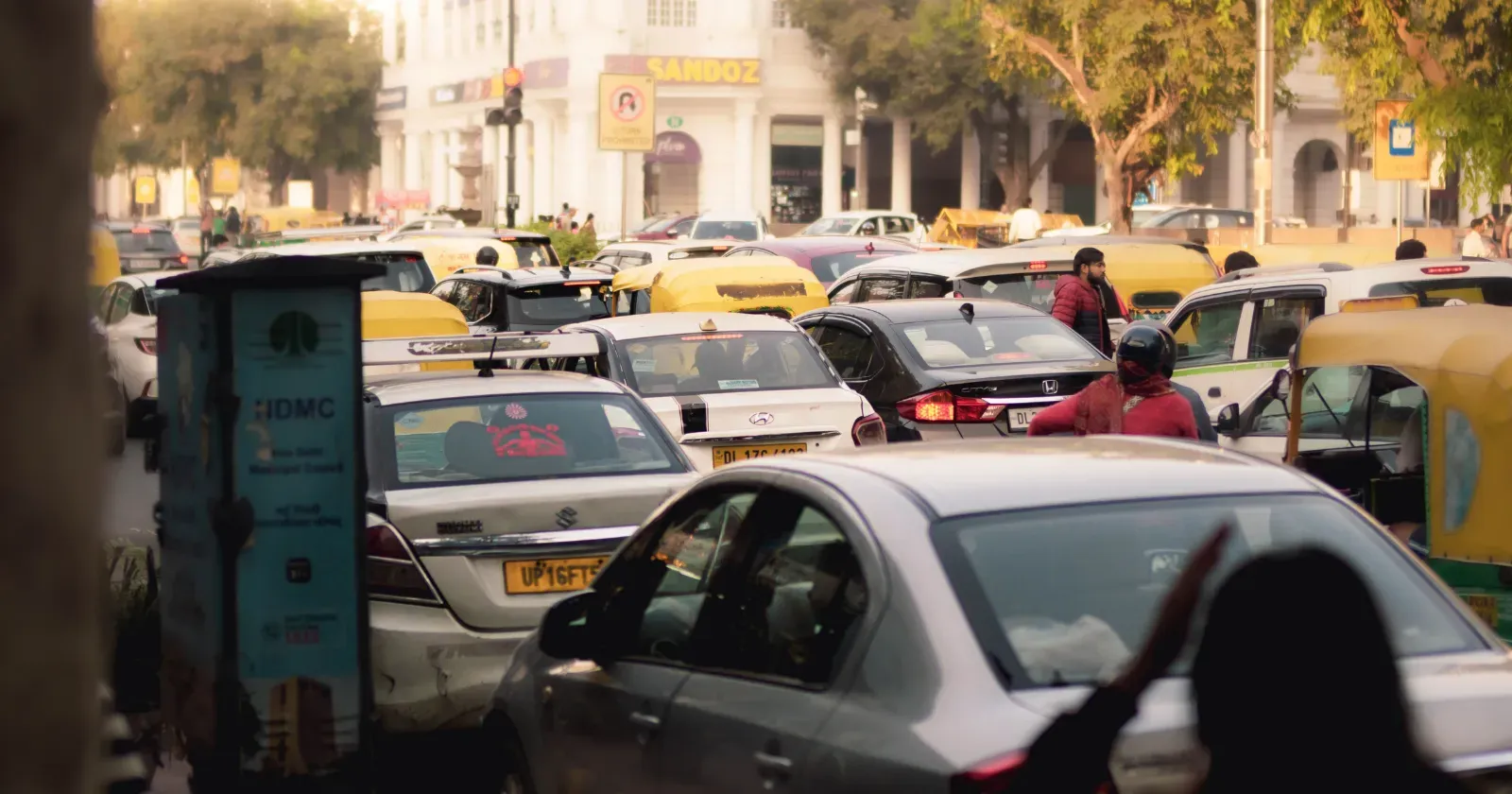
The final CAFE-III framework changes the emissions formula instead of granting a separate benefit to small petrol cars and retains strong compliance incentives for EVs and hybrid vehicles.


Share Post
The final CAFE-III framework changes the emissions formula instead of granting a separate benefit to small petrol cars and retains strong compliance incentives for EVs and hybrid vehicles.
After months of drafts, consultations and industry dispute, the Ministry of Power finally notified the Corporate Average Fuel Economy (CAFE-III) norms Tuesday night aimed at cutting carbon dioxide emissions from passenger vehicles. Notably, the final framework does not provide a separate concession for small cars, a measure that country's largest carmaker and leading small-car seller Maruti Suzuki India (MSIL), had strongly sought.
The final rules take effect from April 2027 and will remain applicable until March 2032.
The September 2025 draft had proposed a special concession for petrol cars weighing up to 909 kg. Under that proposal, 3 grams per km (g/km) would have been deducted from the vehicle's carbon dioxide emissions figure while calculating a manufacturer's CAFE performance. Several other automakers, including electric vehicle (EV) makers Tata Motors and JSW MG Motor, opposed the provision.
They argued that the proposed benefit would disproportionately favour a segment largely dominated by a single carmaker. The disagreement intensified and eventually reached the Prime Minister's Office (PMO). Rather than creating a separate category for sub-909 kg cars, the Centre has altered the broader CAFE formula used to determine each OEM's carbon dioxide emissions target.
CAFE targets are calculated at the manufacturer level rather than being fixed individually for every vehicle. The formula takes into account the weighted average weight of vehicles sold by a manufacturer. A heavier fleet receives a higher permitted fuel consumption target.
The September 2025 draft used a reference weight of 1,170 kg and applied a relatively steep weight adjustment. It also included the separate 3 g/km concession for qualifying petrol cars weighing less than 909 kg.
The final notification removes that concession and raises the reference weight to 1,229 kg. It also introduces a flatter weight adjustment, with the annual multiplier declining from 0.00158 in FY28 to 0.00131 in FY32.
The change alters the impact of the formula across vehicle categories. Lighter fleets receive a softer target than they would have under the September 2025 formula, while heavier fleets face a tougher target. The final structure therefore makes the formula significantly stricter for very heavy vehicles, while providing greater relief to lighter vehicles without creating a separate sub-909 kg category.
The first CAFE-III draft was released by the Bureau of Energy Efficiency (BEE), which operates under the Ministry of Power, in June 2024. Maruti subsequently sought separate relief for small cars. The September 2025 draft formally introduced the 3 g/km provision, triggering a sharp division within the industry. A further revised draft issued by the BEE in July this year removed the proposed small-car concession.
CAFE-III also gets super-credit mechanism, which gives additional compliance value to carmakers selling cleaner vehicles. Under the final framework, one battery electric vehicle (BEV) will be counted as three vehicles when calculating a manufacturer's fleet performance. Range-extended electric vehicles (REEVs) receive the same 3x factor.
Plug-in hybrids and strong hybrids running on flex-fuel receive a 2.5x factor, while strong hybrids have a 1.6x factor. Flex-fuel vehicles receive a 1.1x factor. A fuel blend containing at least 85 per cent ethanol is classified as flex-fuel.
The final structure differs considerably from the June 2024 proposal. The original draft had proposed a 4x factor for BEVs, 2x for plug-in hybrid electric vehicles (PHEVs), 1.2x for strong hybrids and a 5x factor for hydrogen fuel-cell vehicles. Hydrogen fuel-cell vehicles are not included in the final super-credit table.
The final notification also introduces a credit-debit mechanism, giving auto OEMs greater flexibility in complying with their prescribed emissions targets. A manufacturer whose actual fleet performance is better than its target earns credits, while performance below the prescribed level results in debits. These are recorded in a manufacturer-level passbook.
The framework does not require every manufacturer to meet its target exactly in every individual year. Credits can be carried forward within a compliance block. The first block covers FY28-FY30, while the second covers FY31-FY32. Manufacturers can also trade credits with other automakers.
Where a manufacturer continues to have a deficit, it can purchase credits from the BEE. The buyout price starts at ₹2,500 per gram of carbon dioxide per km in FY28 and increases by ₹500 annually to reach ₹4,500 in FY32.
The credit trading window will remain open from October 1 to October 31 each year, adding another compliance mechanism as automakers prepare for the CAFE-III regime from FY28.

Range Rover Sport Electric Unveiled; Bookings Open in India Ahead of 2027 Launch
Tushaar Singh Gill 30 Sept, 2026, 7:03 AM IST
Porsche Cayenne Electric Launched in India Starting at ₹1.77 Crore
Acko Drive Team 30 Sept, 2026, 6:34 AM IST
CAFE-III Norms Notified Without Small-Car Concession, 3x Credit For EVs
Krishna SinhaChaudhury 30 Sept, 2026, 6:08 AM IST
BMW 3 Series, i3 Launched: Neue Klasse Design, Mild Hybrid, New Cabin Tech
Acko Drive Team 30 Sept, 2026, 5:16 AM IST
Indian Navy And TVS Launch ‘Fleet To Forts’ Motorcycle Expedition In Maharashtra
Krishna SinhaChaudhury 29 Sept, 2026, 6:20 PM IST

Looking for a new car?
We promise the best car deals and earliest delivery!
