
Let me tell you a tale of two brothers. The older brother studied day and night, worked really hard, joined the family business early on, took on every rival, and now runs the market. That brother, you know, is the Creta. And then there’s the younger one: suave, well-polished, better hair, better dressed too, and clearly born into a different generation. Meet the new Hyundai Bayon. Both brothers are operating in the same segment, which the elder sibling clearly dominates. So, how different really is the Bayon then? This is not a family feud, Hyundai says, because the Bayon is here to do more. Will this strategy work in real life? Time to find out.
In this article
Hyundai Bayon Review: Sibling Rivalry?
The Bayon is Hyundai’s second take on the compact SUV segment, and will be sold alongside the mighty Creta - which is likely to move a segment above. It’s not a sibling rivalry then, but a two pronged approach to capture a wider market share.

Hyundai Bayon Review: Design
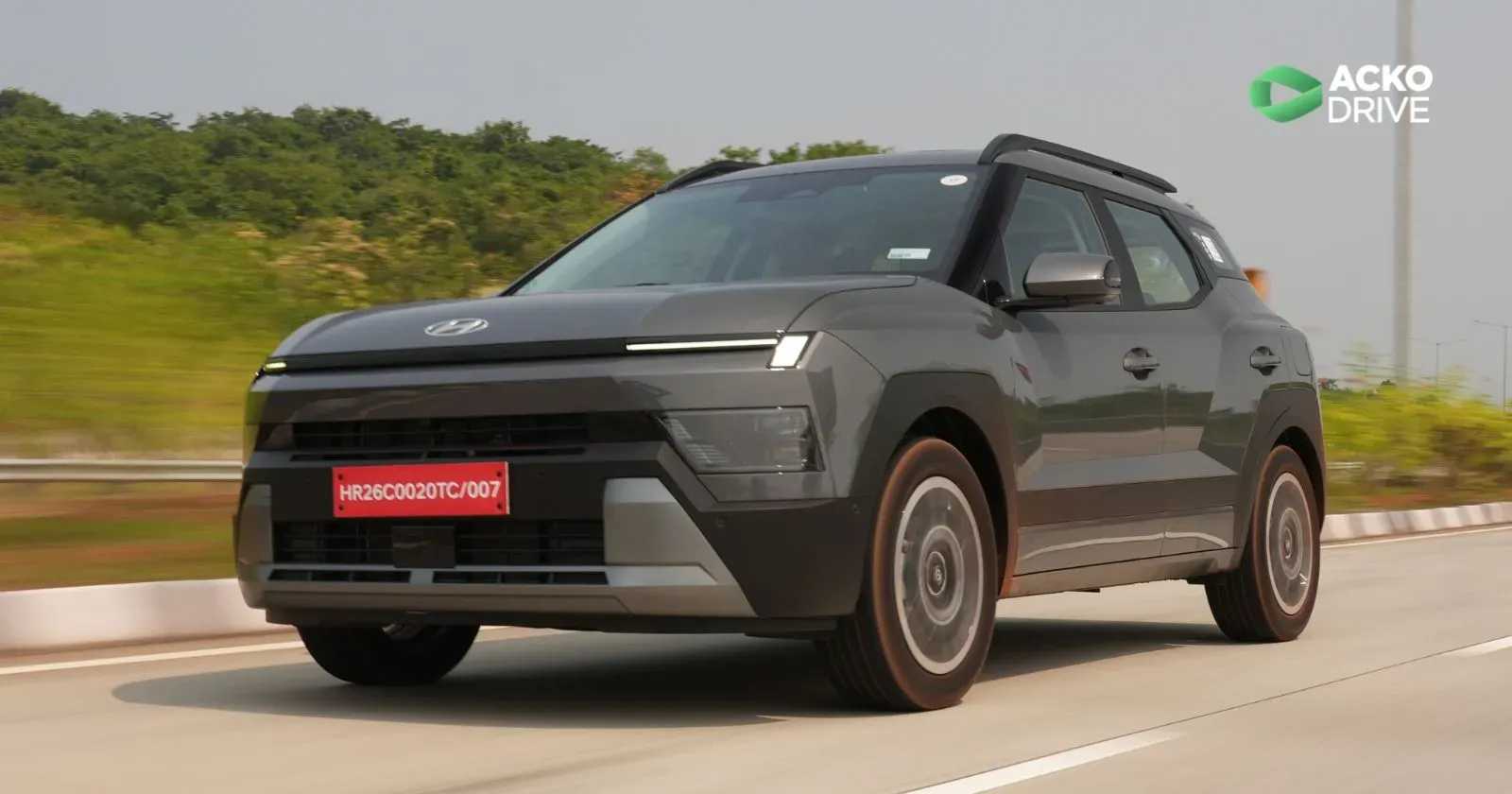
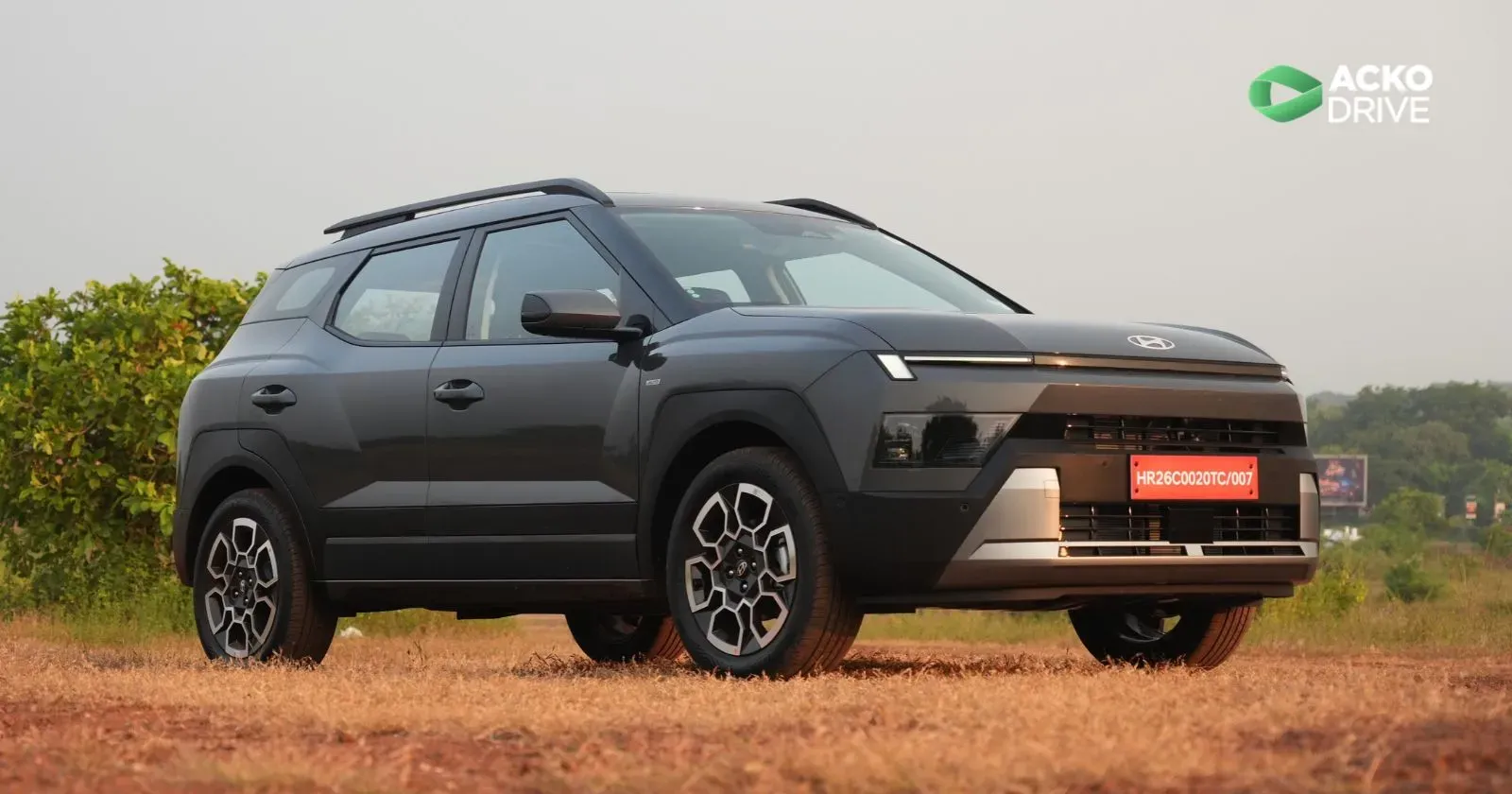
In terms of proportions, the new Bayon fits right under the Creta. It’s 85 mm shorter in length at 4245 mm, and is about the same length as the first-generation Creta. It’s also 25 mm smaller in height at 1605 mm, but stands wider overall at 1810 mm. It has a better ground clearance though at 205 mm.
The SUViness of is established in Hyundai’s signature H-edge LED DRLs, while dual LED projector headlamps take care of the illumination. The plastic cladding on the bumper adds the rugged elements in what is a futuristic-looking SUV.
Hyundai calls this ‘The Art of Steel’ design language, which debuted with the Boulder concept earlier this year. You’re seeing more of this design on Hyundai cars globally with the new-generation Tucson, and the Bayon is the first car in India to flaunt the same. Sharp lines, flat surfaces and accentuated wheel arches. Notice the flared rear wheel arch? All of that is identical to the new Tucson. I also see a little bit of the Ioniq series in this design language, and honestly, this is quite nice.
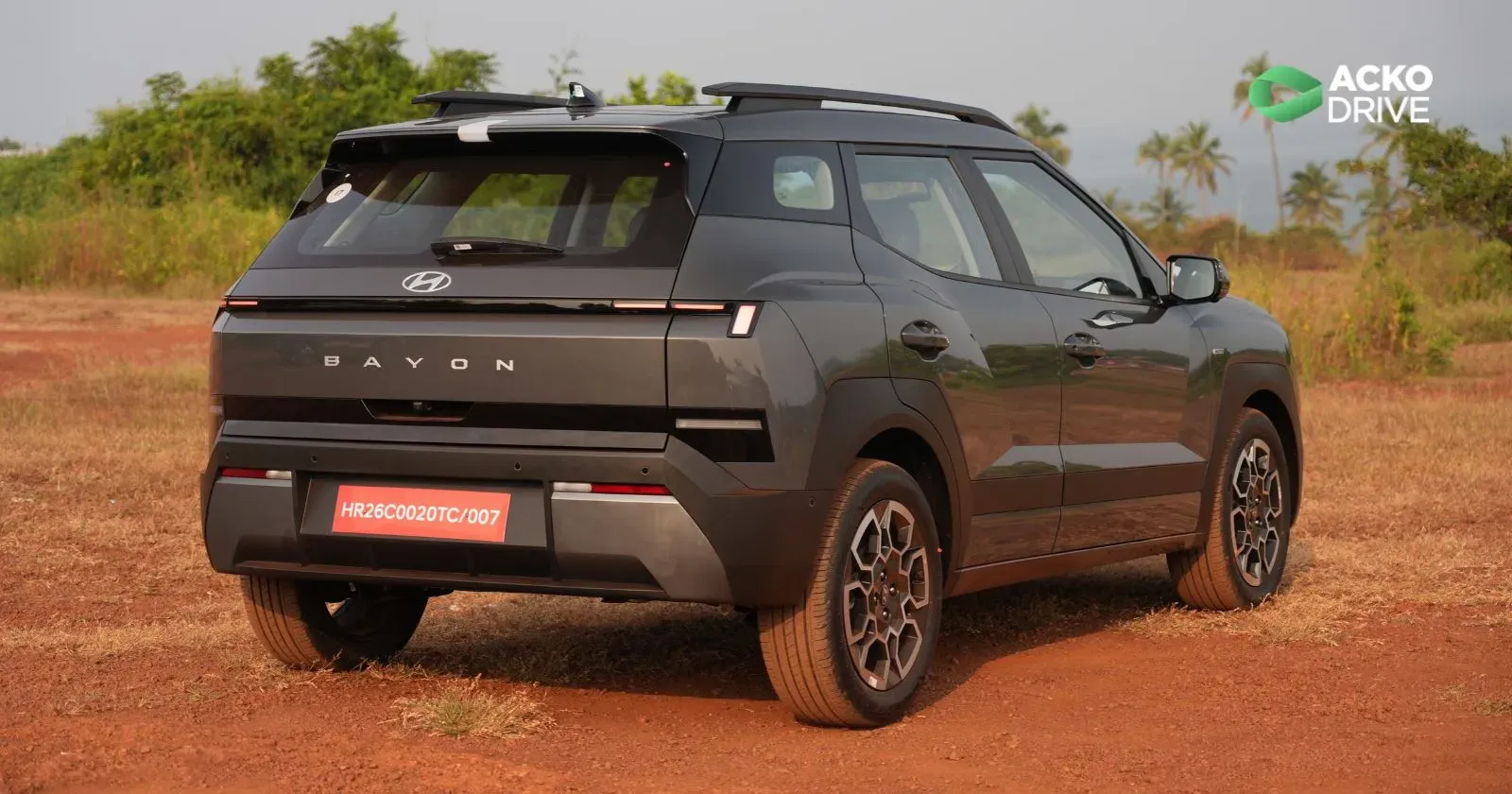
The 17-inch alloys on the top trim are also quite nice, and I particularly like the bridge-type roof rails that also look very funky and add some heft to the overall design. At the rear, the H-themed LED tail lamps keep things sharp, and the near flat surfaces make for clean lines overall. The brake lights are mounted on the roof spoiler and at the bottom. Given the proportions, the Bayon does not command a strong road presence but it is quite pleasing to look at, and I reckon, this will be a design that’ll age really well in the coming years.
Hyundai Bayon Review: Cabin
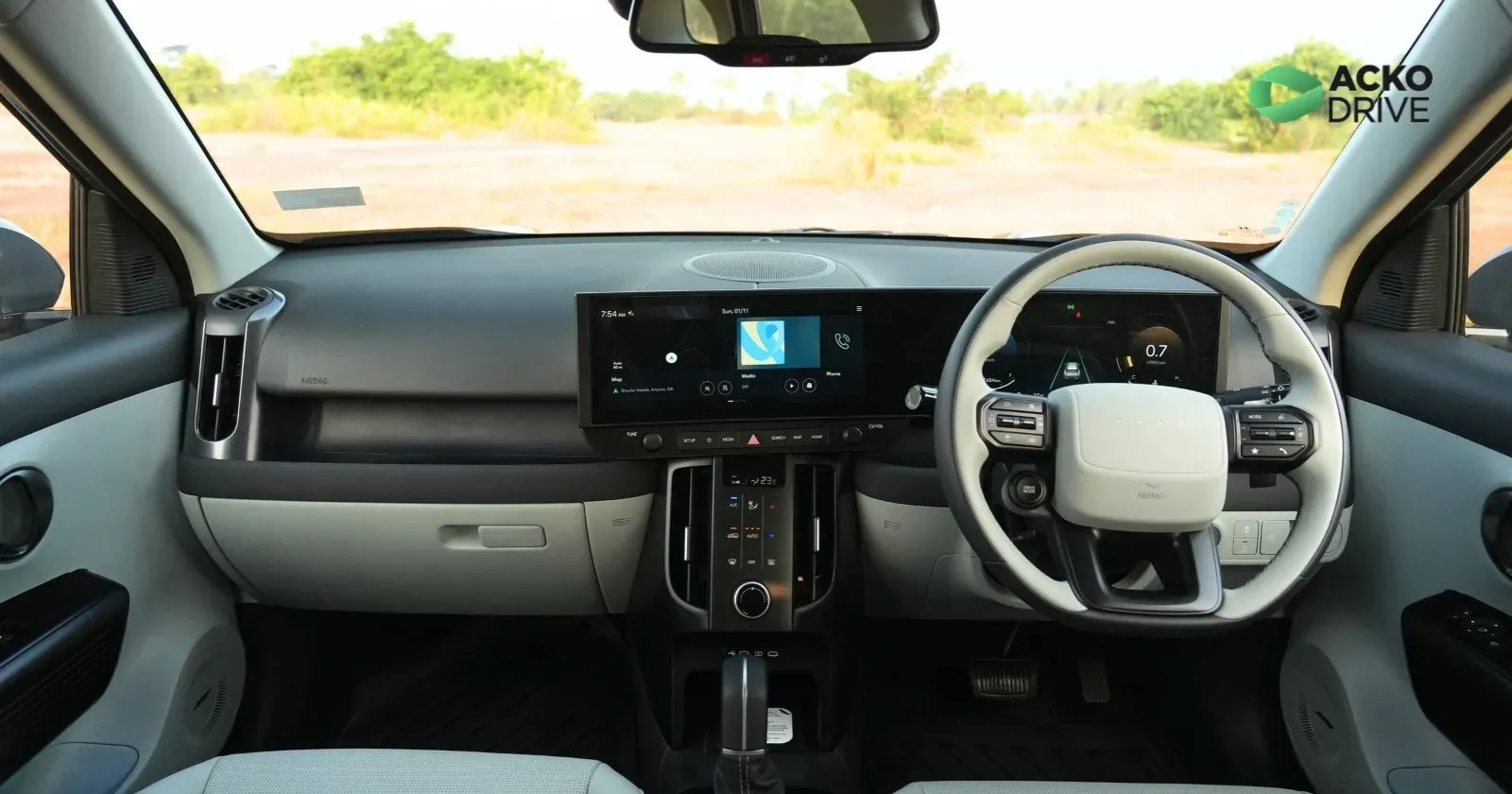
The Bayon’s wheelbase measures 2600 mm, only 10 mm shorter than that on the Creta. However, the shorter roof and compact dimensions make the cabin feel smaller. The plastics are basic but definitely sturdy. The fit and finish are quite nice too. I do like the way everything has been put together. Even on the outside, the panel gaps paint finish and the plastic cladding are all very uniform. You can see some of the cost-cutting inside around the doors, but the visible bits are well-covered.
The black and grey theme is restricted to the monotone colour options, while the dual-tone colours get an all-black cabin with red inserts that looks and feels much sportier. There are lots of textures around the cabin, black on top, grey at the bottom, and fabric around the crashpads. The front door trims get soft-touch plastic, which goes missing on the rear doors. The greys are not to my taste and also appear prone to attracting stains faster. They cheapen the cabin to an extent, which all the all-black cabin masks rather well.
Hyundai Bayon Review: Front Seats
You get an 8-way electrically adjustable driver’s seat with ventilation for both front seats. There’s a driver armrest with a little storage space underneath and I love the steering wheel. You have leather wrapping on the top variants and tactile buttons too, including a dedicated drive mode. The cushioning is quite nice too, and the seats are quite supportive. The dual screens are quite nice and angled towards the driver. The graphics are nice and crisp, the touch feels just right, and all of it works well. But I would like a brighter background rather than going all black, which gets hard to read in direct sunlight.
An oddball design choice? Well, the door handles feel like nostalgia-bait here. I’m also not a fan of the HVAC controls, which do not get physical buttons and the air vent placement feels a bit too low.
Hyundai Bayon Review: Features
The feature stack is extensive with wireless Android Auto and Apple CarPlay, ambient lighting, auto climate control, wireless charging, a premium Bose speaker, push button start, and connected tech. Hyundai also offers a dash cam on the top two trims, which is getting increasingly common, and certainly an important addition in today’s times.
The 12.3-inch dual screens are relegated only to the top HX10 variant, which does feel shortsighted, and should’ve been offered on the lower trims as well. That applies to ADAS as well. You also get the 360-degree view camera but cost-cutting is evident with respect to camera quality when compared to the Creta or even the Venue.
Hyundai Bayon Review: Meet The In-Car AI
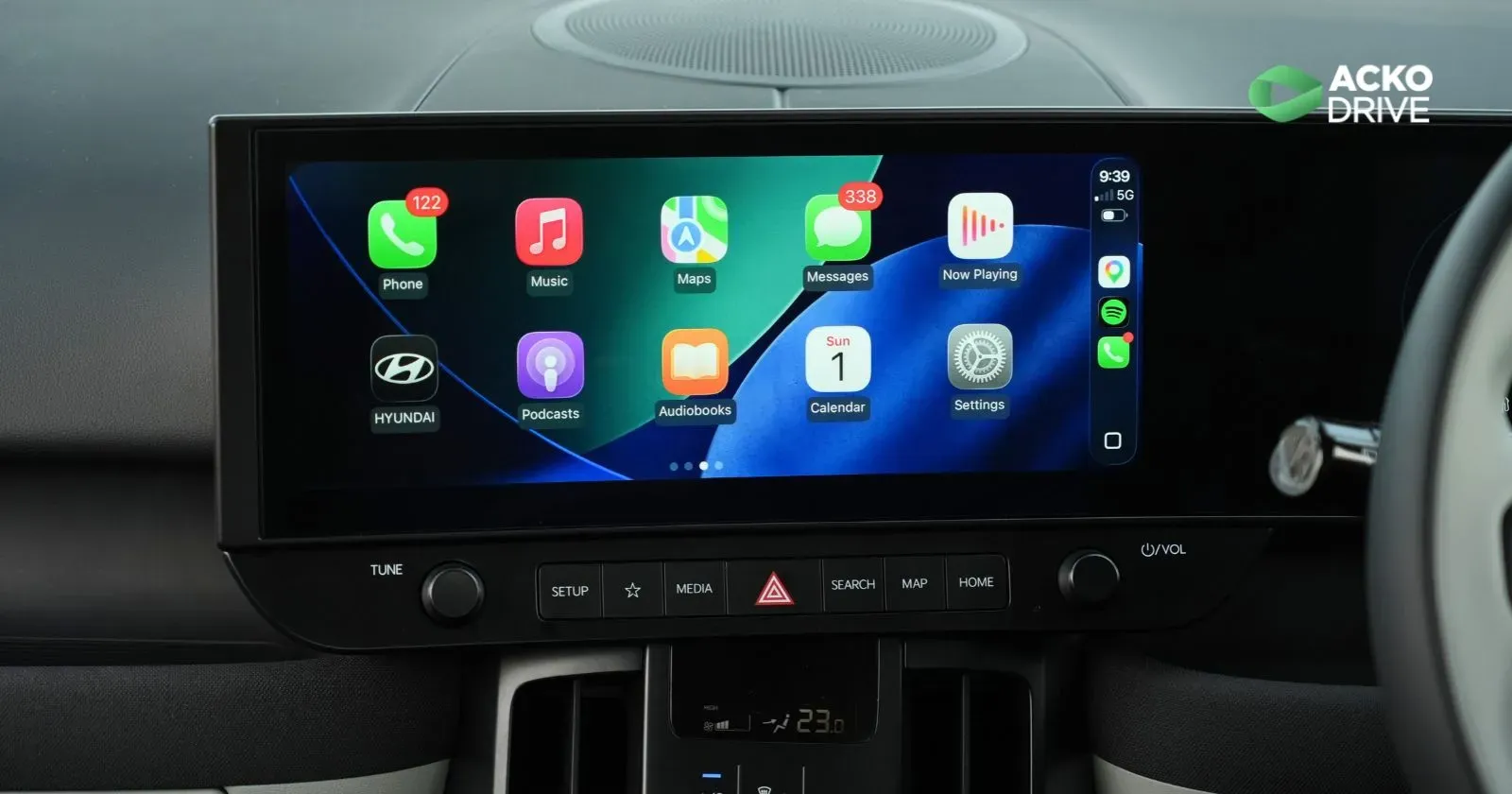
Hyundai has partnered with Perplexity AI to offer Generative AI inside the Bayon. This is not a basic system which answers about the weather or traffic, but will be able to handle more complex tasks. The feature in itself is quite nice to use, and responded to our questions well. Do you really want to speak to AI instead of a human? I have bigger concerns about that.
Hyundai Bayon Review: Rear Seats
Moving to the rear seat, I think this is a decent space to be in. Legroom is just decent, and I can tuck my legs under the driver’s seat. So, in that sense, this is decent enough. Under-thigh support is great. I think that is really nice, and overall, it’s not a very large cabin, but definitely comfortable. Two people will be very easily comfortable here. And remember, this is a wider cabin compared to the Creta. So, yes, three should be okay. Not very great, but okay for sure. Headroom is again decent, not a lot, but then you also have the panoramic sunroof creeping into the space that way. You get an adjustable or reclining rear seat, so this can be adjusted too for better comfort. Little things that do make a difference. You also have a centre armrest with cup holders. This is a nice touch, but, yes, you do not get sun blinds or any of the other premium features. You do get rear AC vents, though, with a single Type-C USB port and a 12-volt socket.
Hyundai Bayon Review: Boot Space
Hyundai says that the boot capacity on the Bayon is up to 505 litres, but what they didn’t tell you is that this goes all the way up to the ceiling. What most of you use is the space up to the parcel tray, and this is still a decent-sized boot. We have about two cabin bags here, two backpacks, and there’s still plenty of space. Barring the base trim, you get a 15-inch spare on all other variants of the SUV, which is great to see.
Hyundai Bayon Review: Engine
Unlike the Creta which has options galore, the Bayon comes with just a single engine. No turbo-petrol, multiple transitions, or a diesel. Customers are bound to be a tad disappointed. This is a 1.5-litre naturally aspirated petrol engine. We’ve seen this engine before. It also powers the lower variants of the Creta. It makes about 113 bhp and about 144 Nm of peak torque. In the city, it’s very comfortable and very nice to use. And with the IVT, which is CVT in Hyundai speak, I think it works fabulously well. It’s not a very sporty engine in terms of performance, but what you do get is a very comfortable engine to be with. The NVH levels are great. I think the performance is nice, and the lower end is quite tractable. It’s only at the top end where you feel the lack of power.
Hyundai Bayon Review: Dash Boost
The Bayon is lighter than Creta, and feels more spirited despite the same powertrain. The downside is the CVT, and Hyundai has tried to circumvent that with a new Dash Boost mode. The system predicts that you need more power every time you floor the accelerator, and will give you a quick burst of power for a short period.
Hyundai should consider bringing the 1.0-litre turbo or maybe a hybrid even on the Bayon in the future. The current 1.5-litre diesel from the Creta would be a fantastic pick too. Nevertheless, the CNG version is on its way as early as January next year.
Hyundai Bayon Review: Ride, Handling & Braking
The ride quality is quite plush on the Bayon. It nearly gobbles up everything, from potholes to expansion joints, and it has a softly sprung setup. The trade-off, then, is the handling. This is not a corner carver. Body roll is very evident. But, yes, nothing too uncomfortable either, and I don’t have a problem with that. This is supposed to be a family car, and younger buyers will be buying it. But, yes, if you are looking at something sportier in that sense, the Germans are available in this space. Braking is good, a little soft on the lever, but stops well in time. The top trims get rear disc brakes, which work well.
Hyundai Bayon Review: Safety
The Bayon is built on the Global K enhanced platform and uses over 69 per cent of multi-grade high-strength steel in its construction. The safety package includes six airbags as standard, along with ABS with EBD, ESC, Hill-Start Assist, ISOFIX anchorages, and more. The top trims getLevel 2 ADAS which brings Forward Collision Warning, Lane Keeping Assist, Blind-spot warning, and more. The Highway Driving Assist function is particularly interesting, and can adjust cruising speeds based on upcoming curves, supported by navigation data. We are yet to test out this feature and will definitely do once we have the car for longer.
Hyundai Bayon Review: Competition
The real competition for the Bayon is not the Seltos, the Grand Vitara or even the Creta. Those are much bigger compact SUVs. Your real competition then becomes something like the Victoris, the Elevate and, of course, the Kushaq and Taigun in their 1.0-litre variants. Those sit closer in terms of pricing too, and are equally stylish.
Hyundai Bayon Review: Verdict
The Bayon is pricey on the top variants, starting at ₹10 lakh, and going up to ₹18 lakh (ex-showroom). This will be a point of contention for buyers. What the Bayon needs then is more equipment on the mid trims to truly feel like a value-friendly purchase, at least till the next-generation Creta arrives, likely as a more expensive proposition.
So, why should you buy the Bayon, then? Well, it has the urban mobility quotient bang on. It’s easy to drive and easy to live with. And I think those factors will pull in a lot of buyers from urban centres. The Creta still holds a lot of command in Tier 2 and Tier 3 markets, but the Bayon brings a new flavour, which will resonate with younger buyers. I reckon some buyers will be swayed from the Venue and i20 as well, given the larger proportions on the Bayon So, the little brother has arrived and definitely isn’t here to compete with the Creta, but to lend a hand when it comes to overall volumes.