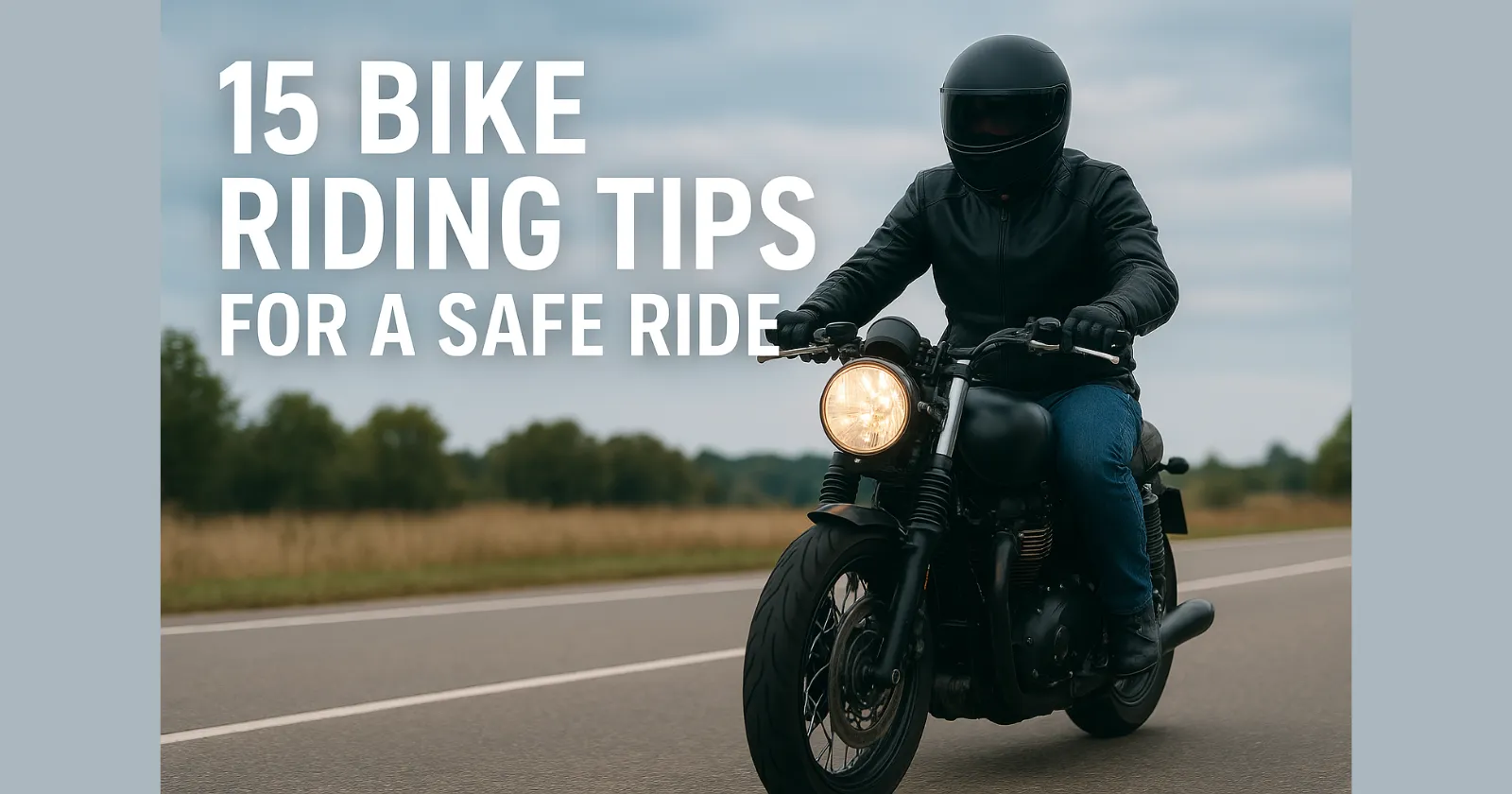
1. Always Wear a Helmet
This is the most basic and most important rule. Your helmet protects your head in case of an accident. You should never skip it, even if you're riding just a few kilometres. Make sure you choose an ISI-marked full-face helmet as it gives the best protection. It should fit your head properly, not too loose or too tight. Also, keep the visor clean so your vision stays clear.
2. Check Your Bike Before Every Ride
A 2-minute check before riding can save you a lot of trouble later. Here are a few things you should check:
- Tyre pressure and any visible damage
- Brakes (front and rear)
- Headlights, tail lights, and indicators
- Fuel level and engine oil
- Mirrors (adjust them before moving)
It’s always better to fix problems at home or at a mechanic shop; otherwise, you may get stuck on the road, which will be a big headache.
3. Follow Traffic Rules
Many accidents in India happen because people ignore basic road rules. That's why it is vital to follow rules, such as:
- Don’t jump red lights.
- Don’t ride on footpaths.
- Don’t overtake from the wrong side.
- Don’t use your phone while riding.
4. Use Indicators While Turning
Signalling before changing lanes or taking turns is always the best approach. Indicators tell others what you plan to do, which helps avoid confusion and accidents. If your indicators are not working, use hand signals clearly and in time.
5. Keep a Safe Distance
Never ride too close to the vehicle in front of you. You never know when they might stop suddenly. So, it is better to maintain at least 2–3 seconds of distance. This gives you enough time to brake or react in times of emergencies. When it comes to highways and crowded roads, you should always maintain a safe gap to prevent serious crashes.
6. Ride Within Your Limits
Don’t try to copy other fast riders or show off stunts on public roads. Always stick to a speed that you can handle comfortably, and ride slower on wet roads or near speed breakers. Also, avoid sharp turns unless you're trained to handle them.
7. Avoid Riding in Blind Spots
A blind spot is an area around a vehicle that the driver can't see in their mirrors. Big trucks, buses, and cars often have blind spots. The tip that will save you is that if you can’t see the driver’s face in their side mirror, they probably can’t see you either. So, stay out of blind spots and always overtake from the right side, not from the left or footpath.
Monsoon in India brings slippery roads, water-filled potholes, and low visibility. So, you need to give special attention while riding in the rainy season. Slow down as wet roads reduce tyre grip and avoid sudden acceleration. You can wear a raincoat with reflective strips and waterproof boots. If visibility is very poor, it’s better to stop and wait instead of risking a ride.
9. Use Both Brakes Properly
Using only the front or rear brake can be dangerous. That is why it is important to press both brakes gently and together. This gives better control and helps stop the bike safely. You can practice braking in an empty area to understand how your bike behaves.
10. Keep Your Documents with You
Make sure to always carry these documents:
- Driving Licence
- RC (Registration Certificate)
- Insurance papers
- Pollution Under Control (PUC) certificate
Keep them in a waterproof pouch or folder. Many states now also accept digital copies via apps like DigiLocker or mParivahan.
11. Refuel on Time
Never wait until the fuel tank is almost empty. Running out of petrol in the middle of traffic or on a lonely road is not only stressful but also risky. You should refill the tank when the fuel meter shows 25–30% left. Also, make sure you avoid using very low-quality petrol from roadside vendors.
12. Don’t Use High Beam in City Traffic
High-beam lights are meant for highways or very dark roads. In cities or areas with other vehicles, using high beams can blind oncoming drivers and cause accidents. Use the dipper (low beam) in traffic and switch to high beam only when needed.
13. Get Your Bike Serviced on Time
This is one of the most important bike riding tips. Regular servicing keeps your bike running smoothly and prevents major issues later. Common service checks:
- Engine oil
- Brake pads
- Air filter
- Spark plug
- Chain lubrication
Follow the service schedule given in your bike’s manual or ask your mechanic.
14. Use Tubeless Tyres if Possible
Tubeless tyres are pretty easy to repair and safer if you get a puncture while riding. They don’t lose air suddenly like tube tyres. So, you get more time to stop safely.
If your bike still uses tube tyres, then you should consider upgrading during your next tyre change.
15. Don’t Drink and Ride
This is non-negotiable. You should never drink and ride. Alcohol slows your reflexes, affects judgment, and increases the risk of accidents. Even if you feel "normal," your body is not fully in control after drinking. Take an auto, ask a friend, or use a cab. Never mix riding with drinking.
Final Thoughts
Riding a bike in India is convenient, exciting, and often necessary, but only if you do it responsibly. The road is shared by many people: pedestrians, cyclists, other bikers, buses, cars, and your actions affect all of them.
Good riding is all about knowing your bike, respecting the road, and staying aware of your surroundings. Use these tips every time you ride, whether you're going to the market, office, or on a weekend trip.
With the right habits, you can enjoy every ride while keeping yourself and others safe. Happy riding and always wear your helmet!
Frequently Asked Questions