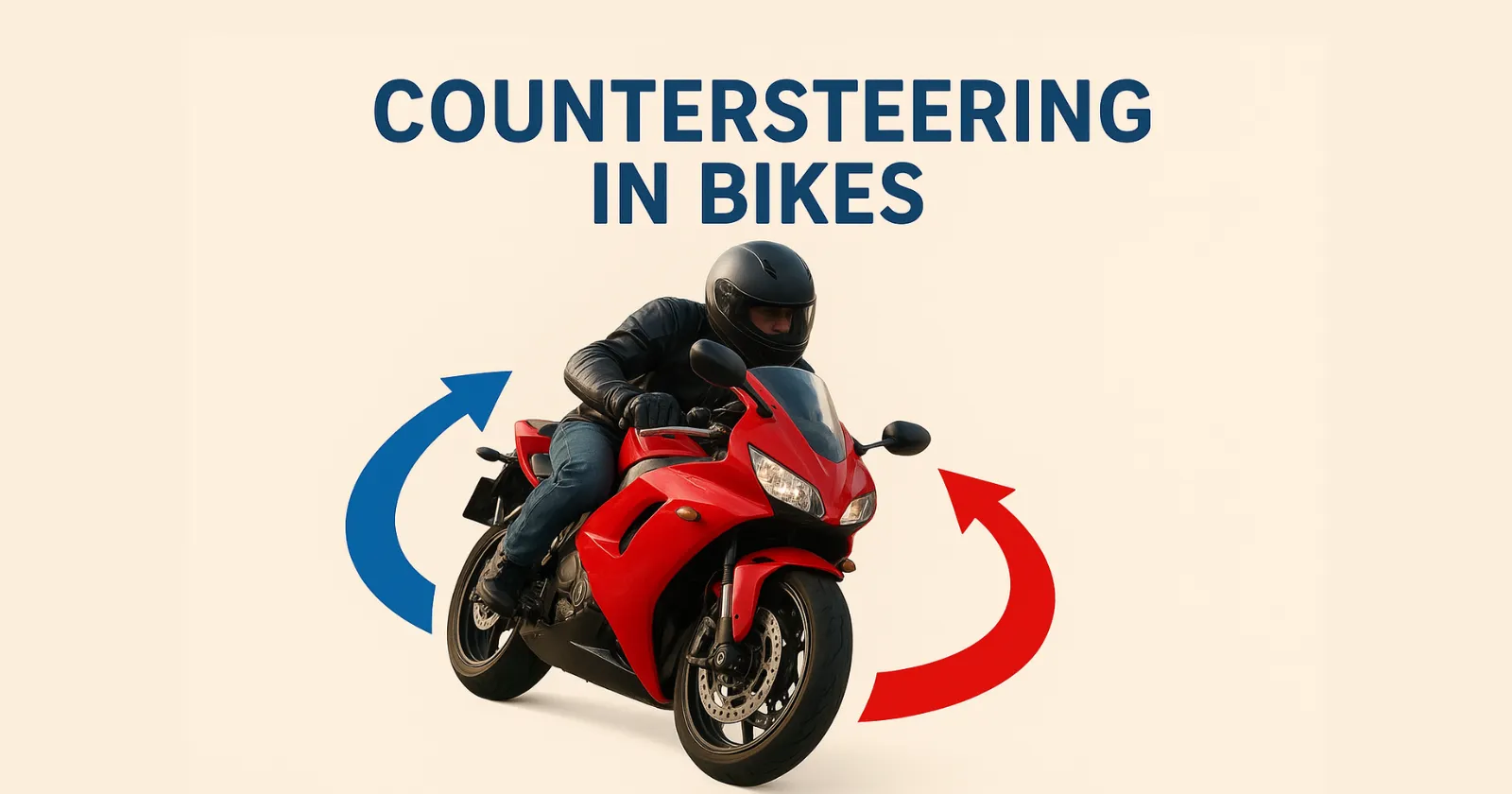
What Is Countersteering in Bikes?
Counter steering is the technique of gently pushing the handlebar to the side you want to turn. To turn right, you first push the right handlebar away from you. The bike responds by leaning into the turn, allowing a smooth right turn. It may feel counterintuitive, but this push pre-loads the lean so that the bike naturally follows the desired curve.
How to Practice Countersteering on Bikes
Here’s a step-by-step guide for you.
- Warm-Up Exercise: At a slow walking speed (5–10 km/h), gently turn the handlebars to feel the steering lock; this isn’t countersteering, but it familiarises you with lean activation.
- Open Space Drill: On a quiet stretch, accelerate to about 30–40 km/h, then gently push the right handlebar to turn right and the left handlebar to turn left. Keep feet on pegs.
- Speed Variation: Practice at different speeds, from 30 km/h to 60 km/h, to feel how much pressure the handlebars need.
- Look Ahead: Keep your eyes focused on where you want to go, not where the bike is. The body and bike will follow naturally.
- Combine with Head Movement: Look through the turn; your shoulders and upper body will help guide the lean.
Why Countersteering in Bikes Matters
Quick Lane Changes
Swift directional shifts are often needed when overtaking or avoiding potholes. In such cases, countersteering becomes your best tool, allowing quick yet controlled direction changes that keep you stable even during sudden manoeuvres.
Safe Cornering on Curvy Roads
This is especially important in mountainous terrains like the Himalayas or the Western Ghats. In these regions, where roads twist and turn sharply, countersteering helps you lean and steer with precision, making tight bends safer and more predictable.
High-Speed Stability
Maintaining control at highway speeds is essential for rider safety. Here, countersteering plays a big role, helping you handle wind resistance and lane changes without wobbling or drifting out of control.
Better Agility in City Traffic
Riding through narrow streets or squeezing between vehicles requires sharp handling. With countersteering, you can smoothly weave through traffic without jerky movements, making your ride faster and more comfortable in crowded conditions.
Common Mistakes to Avoid While Counter Steering on Bikes
Below are some of the mistakes you should avoid.
Avoid jerky or exaggerated handlebar pushes as they make the bike unstable. Smooth and gentle pressure on the handlebars allows better control and avoids sudden, unpredictable lean angles.
Oversteering
Applying too much force when pushing the handlebar can make the bike lean too fast. This can startle the rider and increase the chance of losing balance or misjudging a turn.
Full Lock Turns Only
Many riders think countersteering is for all turns, but it is most effective at moderate to high speeds. At very low speeds, like in parking lots or during U-turns, traditional handlebar turning works better.
Looking Down
Staring at the ground or just in front of the tyre distracts your balance and affects your judgement. Always keep your eyes up and look ahead in the direction you want to go, especially while turning.
Four Benefits of Countersteering in Bikes
Listed below are the four advantages of countersteering.
- Improved Stability: Countersteering allows a smoother start to leaning, which helps keep the bike balanced. This makes the bike's path more predictable, especially when riding through corners.
- Faster Response: With countersteering, the bike reacts almost instantly to your inputs. This quick response becomes extremely useful while overtaking or making urgent lane changes on highways.
- Controlled Cornering: It gives riders the confidence to lean and turn precisely, even on sharp bends. This is particularly helpful on unfamiliar or twisty roads where precise handling is essential.
- Lower Risk of Overcorrection: When you steer correctly, you’re less likely to suddenly jerk the handlebars or panic mid-turn. This smoothness reduces the risk of wobbling or losing balance during fast direction changes.
Tips to Improve Countersteering in Bikes
Here are some effective tips that will help improve countersteering.
Warm up your bike before practising
Cold tyres don’t offer much grip, especially on slippery or dusty roads. A few minutes of riding warms them up and gives you better feedback while steering.
Wear proper riding gear
Wearing gloves, a jacket, and boots not only protects you but also gives you better control and feel. Try riding short distances with and without gear (in a safe environment) to notice the difference in your control and confidence.
Use gradual and light handlebar pressure
Don’t yank or force the handlebar suddenly. Instead, apply gentle pressure to one side of the handlebar to initiate the lean, and you’ll find the bike responds smoothly and quickly.
Keep your bike properly maintained
Worn-out tyres, poor suspension, or low brake fluid can all affect how your bike steers. Regular checks help ensure that your bike responds accurately to your inputs when countersteering.
Final Words
Countersteering is a great riding skill that improves turning precision and stability. On roads, be it twisty mountain passes, monsoon-soaked city streets, or highway stretches, this technique transforms how quickly and safely riders can react to changing road conditions. Practice under safe conditions, maintain your equipment, and allow muscle memory to build. The more familiar you are with countersteering, the more confident and controlled your rides will become.
Frequently Asked Questions