What is a Quickshifter?
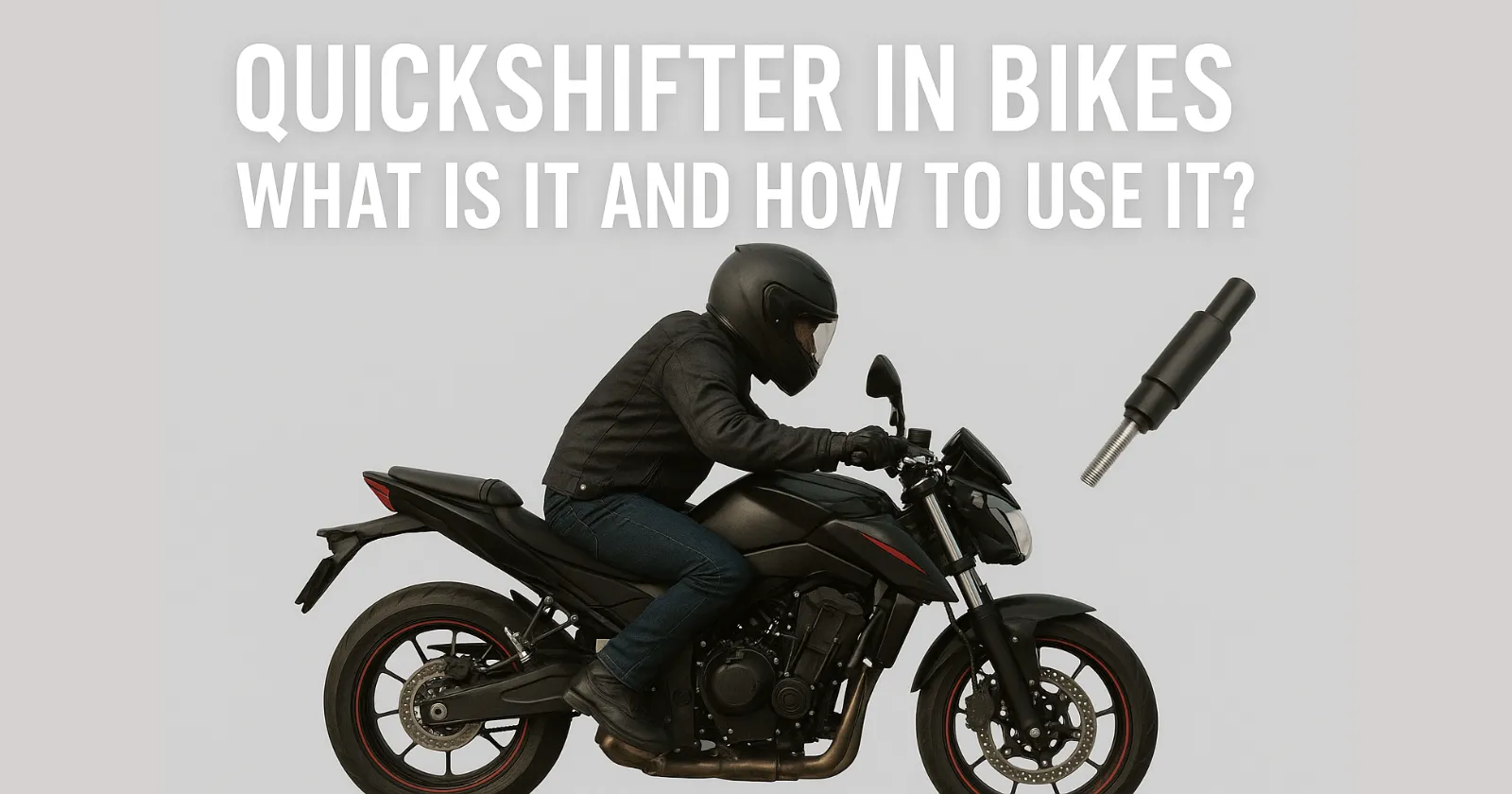
A quickshifter is a device fitted to a motorcycle’s gearbox that allows the rider to change gears up or down without using the clutch. It works by momentarily cutting the power from the engine so that the next gear can be engaged smoothly without damaging the gearbox.
It lets you change gears as fast as in racing bikes, without the extra steps of clutch pulling and throttle rolling. This makes gear shifting smoother, quicker, and less tiring.
How Does a Quickshifter Work?
Here's how it works.
1. You press the gear lever with your foot (either to shift up or down, depending on the type of quickshifter).
2. The quickshifter detects this movement using a sensor.
3. For a tiny fraction of a second (milliseconds), it cuts the ignition or fuel supply to the engine.
4. This removes the power load from the gearbox, making it easy for the gear to slot into place.
5. Power is instantly restored, and you continue riding without any jerks.
The process is so fast that it feels like the gear just “snaps” into place instantly. For regular road riders, it offers a smooth riding experience.
Types of Quickshifters
There are two main types of quickshifters, which are as follows.
1. Up-shift Only Quickshifter
- This is the simpler type and is designed only for gear shifts from lower to higher (e.g., from 2nd to 3rd gear).
- Common in budget sports bikes that want to give riders a racing feel without a high price tag.
- Ideal for highway and track riding where upshifting is frequent.
2. Bi-directional (Up & Down) Quickshifter
- This advanced type allows both upshifting and downshifting without using the clutch.
- Often works with an auto-blipper feature for smooth downshifts.
- Found in premium bikes and some higher-end KTM models.
How to Use a Quickshifter Correctly
It is easy to use the quickshifter. However, there are a few tips to make the most of it.
1. Stay in the Right RPM Range: Works best when the engine is revving higher, not at idle speeds.
2. Firm Gear Lever Press: Apply steady pressure, not a soft tap.
3. Don’t Use in Crawling Traffic: Stick to normal clutch shifting for low speeds.
4. Avoid Overusing in Poor Conditions: Wet, slippery roads may require manual clutch control for safety.
Advantages of a Quickshifter
Here are some benefits of the quickshifter.
1. Faster Gear Changes
When you use a quickshifter, gear shifts in just a few milliseconds. As a result, your bike accelerates more smoothly and efficiently without losing its momentum. It is especially useful when you overtake quickly, because then you can move through the gears faster.
2. Less Rider Fatigue
When you change the gear, you have to pull and release the clutch lever every time. A quickshifter removes this extra step and makes riding far less tiring. It is helpful during long highway rides or even in city traffic, where you have to change gears frequently. So, a quickshifter reduces the strain on your hands and wrists.
3. Better Control
The bike stays more stable through the gear change, as you don’t have to roll off the throttle during a shift. In fact, it helps maintain balance and smoothness, especially when you lean into a corner or ride your bike at higher speeds.
4. Fun Factor
It brings a sporty and engaging feel to your rides, which is pretty similar to the excitement of riding a MotoGP or superbike. The smooth, rapid gear changes make highway riding easier as well as more enjoyable. Not to mention, it adds a sense of thrill to every ride.
Cons of a Quickshifter
Here are some drawbacks of a quickshifter you should be aware of.
1. Higher Cost
Motorcycles that have a factory-fitted quickshifter cost more. Also, installing one later as an aftermarket accessory can be expensive. For budget-conscious riders, this added cost might be a consideration before choosing it.
2. Not Very Useful in Slow Traffic
A quickshifter doesn’t provide much benefit in bumper-to-bumper city traffic. So, you still have to use the clutch for smoother and more controlled gear changes at low speeds. This means its advantage is mostly felt on highways and open roads.
3. Extra Maintenance
A quickshifter depends on sensors and electronic systems to function properly. Over time, these components may require maintenance or even replacement. This does add a layer of upkeep when compared to a simple mechanical clutch system.
4. May Feel Rough in Low RPM
Quickshifters work best at higher engine speeds where the gears engage smoothly. When you use them at low RPM, it can sometimes result in jerky shifts or a less refined feel. So, you need to be aware of the right conditions to use it for the best results.
Top Maintenance Tips for Quickshifters
If you have a quickshifter on your bike, you must follow these simple care tips.
- Keep the Sensor Clean: Dust and grime can affect performance.
- Regularly Check Wiring: Loose or damaged wires can cause malfunction.
- Get Professional Servicing: If shifts feel rough, get it checked at an authorised service centre.
- Use Correct Gear Oil: Smooth shifting depends on well-lubricated gear parts.
Should You Get a Bike with a Quickshifter?
It totally depends on your riding condition. If you ride mostly in the city at low speeds, a quickshifter may not make a big difference in your daily commute. But if you do a lot of highway riding, touring, or like weekend rides, a quickshifter can be a great option as it will make your riding more fun, smoother, and less tiring.
It’s not a must-have for everyone, but for performance enthusiasts and frequent long-distance riders, it’s definitely worth considering.
Final Thoughts
Quickshifters bring racing technology to everyday riders, making gear shifts lightning-fast and super smooth. While they shine the most on highways and open roads, their usefulness in dense Indian traffic is limited. Still, for riders who value performance and comfort, it’s a feature that adds both excitement and convenience.
Frequently Asked Questions