What is E20 Fuel for Bikes?
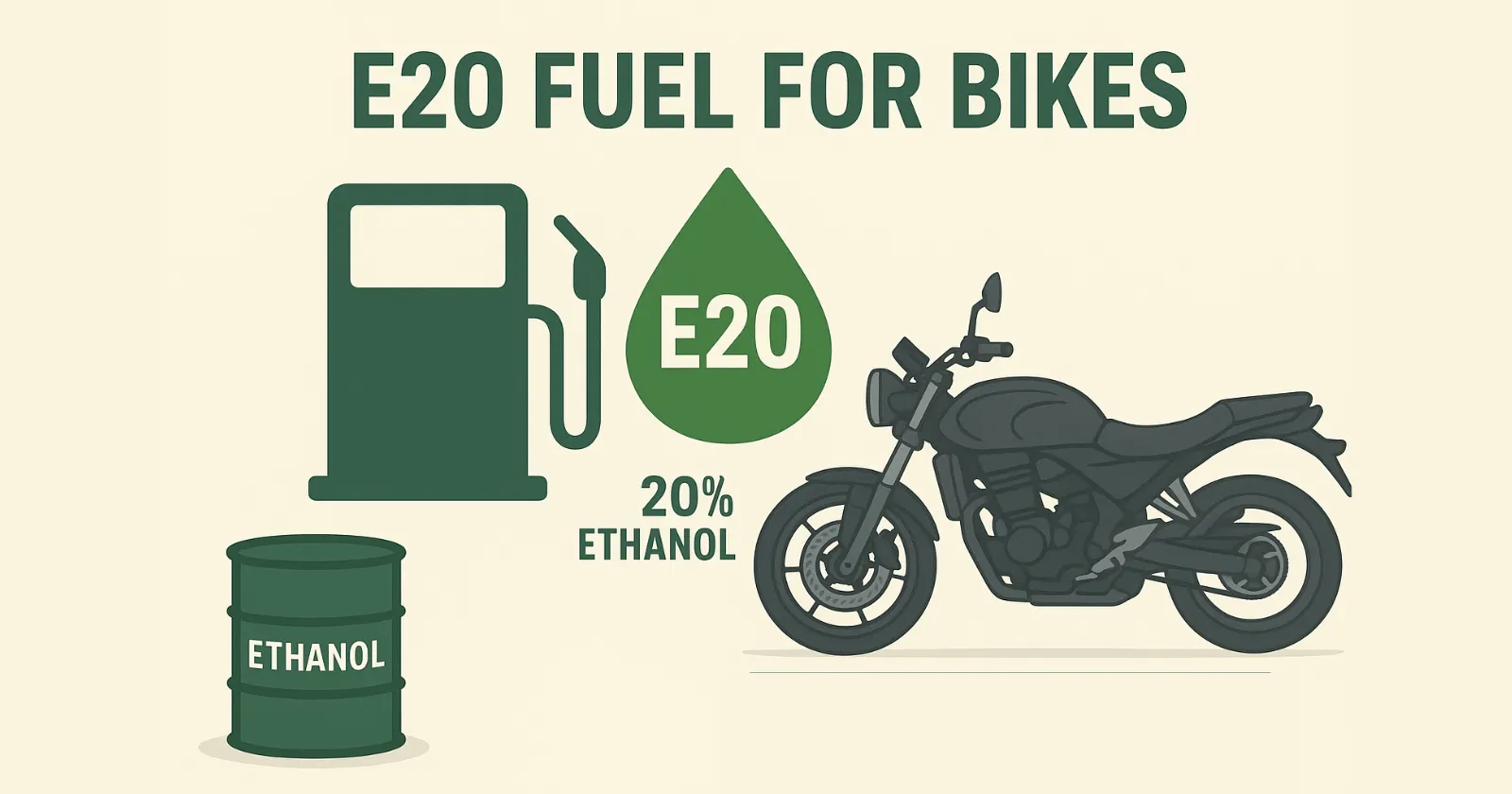
E20 fuel is petrol mixed with 20% ethanol and 80% regular petrol. Ethanol is a type of alcohol made from plants like sugarcane, corn, and other crops.
When blended into petrol, ethanol burns cleaner, producing less harmful emissions. This helps the environment and reduces India’s dependence on imported crude oil.
For bikes, E20 fuel means your engine will run on a cleaner-burning mix while supporting the farmers who supply the ethanol.
Why Is India Shifting to E20 for Two-Wheelers?
Here’s why the change is happening:
- Cleaner emissions: Ethanol reduces harmful gases like carbon monoxide, helping improve air quality.
- Less fuel import: India imports over 80% of its crude oil. By using ethanol made in India, we reduce import costs.
- Support to farmers: Ethanol comes from crops like sugarcane, boosting rural income.
- Government push: The Indian government aims for 20% ethanol blending by 2025–26, so more pumps will soon have E20.
Benefits of E20 Fuel for Bikes
Here are the top four advantages of E20 fuel for bikes.
Lower Pollution
E20 fuel produces fewer harmful exhaust gases like carbon monoxide, unburned hydrocarbons, and nitrogen oxides compared to pure petrol. This is because ethanol burns cleaner and more completely.
For two-wheelers, which make up a large share of road traffic in India, this means less contribution to city smog and better air quality for both riders and pedestrians. Over time, cleaner emissions can also mean less carbon buildup inside the engine, potentially improving longevity.
Better Engine Knock Resistance
Regular petrol in India usually has an octane rating of 87–89, but E20 bumps that up to around 91–92. A higher octane rating means the fuel can withstand more compression before igniting, reducing the chances of engine knocking or “pinging.”
For bikers, this translates to smoother acceleration, less engine stress during high revs, and better performance in hot weather or while riding uphill with a pillion.
Improved Throttle Response
Ethanol contains more oxygen than petrol, which promotes a more complete combustion process in the engine. This results in faster and cleaner fuel burning, giving you snappier acceleration and smoother power delivery.
Riders will especially notice the difference when overtaking or zipping through city traffic, as the bike feels more responsive to small throttle inputs.
Supports Local Economy
Ethanol for E20 is produced from crops grown by Indian farmers, such as sugarcane, maize, and grains. By using E20, you’re helping reduce India’s dependence on costly imported crude oil and supporting the rural economy at the same time.
It creates a win-win situation, a stable fuel supply for the country, better income for farmers, and potentially more predictable fuel prices for bike owners in the future.
Drawbacks of E20 Fuel in Bikes
Listed below are some drawbacks of E20 you should be aware of.
- Ethanol contains less energy per litre than petrol, so it may yield 5 to 8% lower mileage in city driving.
- Bikes that were manufactured before 2010 may face compatibility issues such as corrosion of the fuel line and seals. Also, carburettors are not designed for ethanol.
- Ethanol attracts moisture, which can lead to starting trouble if the bike is unused for long periods.
- In very low temperatures, blends featuring ethanol may not vaporise, and this can result in starting issues.
How to Safely Switch Your Bike to E20 Fuel
Transitioning your motorcycle to E20 fuel is simple if you take the right precautions. This ensures you get all the benefits without risking damage to your bike’s engine or fuel system.
- Always confirm with your bike manufacturer or check the owner’s manual to see if your model is E20-ready. Some newer bikes are already designed for it, while older ones may need minor upgrades.
- If you’ve been running on E10, move to E20 in stages to let the engine adjust. This way, you can notice any changes in mileage, throttle feel, or engine smoothness before going full-time on E20.
- E20 can be slightly more corrosive than pure petrol, so keep up with regular servicing. Replace fuel filters more often and check hoses, seals, and carburettors (if your bike has one) for wear or swelling.
- Ethanol attracts moisture, which can lead to fuel separation if left unused for long periods. If you won’t be riding for weeks, either drain the tank or run the bike occasionally to keep the fuel fresh.
- Be alert for symptoms like poor acceleration, difficulty starting, stalling, or unusual knocking sounds. If you notice these, get your bike checked immediately to prevent long-term damage.
How to Maintain Fuel Quality When Using E20 Fuel in Bikes
Maintaining the quality of E20 fuel is very important. It will ensure consistent performance and prevent potential damage to your bike’s engine.
You should always check that you are filling with E20 fuel. If by chance you mix it with diesel or lower-grade fuel, then your bike’s engine may get damaged.
When refuelling from drums or roadside stations in monsoon-prone areas, there’s a high chance that it will attract moisture. If that happens, you will notice sputtering at the start. In such a situation, what you can do is drain the tank and refill it with fresh fuel.
It is imperative to note that E20 fuel is not ideal for long-term storage. If you don’t use your bike for more than 30 days, the fuel may degrade. Avoid such problems by refuelling every other day and keeping the tank topped up to reduce exposure to air.
Final Thoughts
E20 fuel for bikes is a big step towards cleaner, more affordable, and locally sourced energy. If your motorcycle is E20-compatible, you can switch without worry, but keep an eye on mileage and do regular maintenance. The future of riding in India will be greener, and E20 is part of that journey.
Frequently Asked Questions