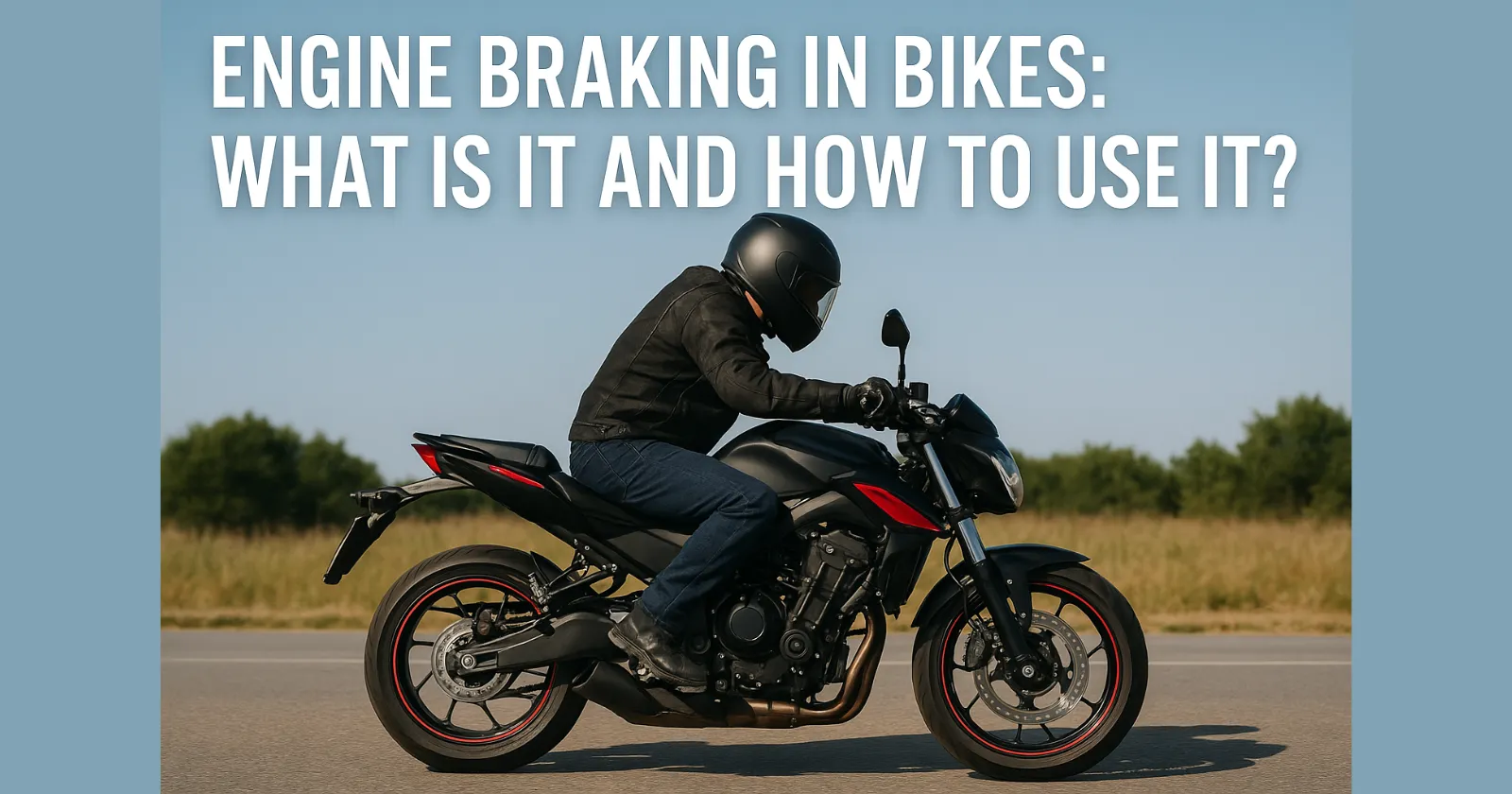
What is Engine Braking?
Engine braking happens when you slow down the bike by releasing the throttle and downshifting to a lower gear instead of applying the brake levers. When you release the accelerator, the engine starts resisting the bike's movement. As a result, it slows the bike down gently and uses the engine’s own resistance rather than the brakes.
It feels like the bike is dragging a bit, and you don’t pick up as much speed even when going downhill. However, it is smooth and controlled and can be very helpful once you learn how to use it properly.
How Does Engine Braking Work?
Here’s a quick guide that will help you understand how engine braking works.
- When you ride and twist the throttle, fuel and air enter the engine. This creates power, and the bike moves forward.
- When you close the throttle, less fuel enters the engine, and it starts resisting the forward motion.
- If you downshift to a lower gear, the engine spins faster at the same road speed, increasing resistance and slowing the bike further.
In this way, the engine itself works like a brake. The effect is stronger in lower gears and when the engine is at higher RPMs.
How to Use Engine Braking on Bikes Properly
Engine braking is not something you need to learn from scratch. If you have been riding for a while, you may already be doing it without knowing. But here is a simple guide to do it better:
Step 1: Ease Off the Throttle
As you prepare to slow down, gradually release the throttle instead of pressing the brake lever.
Step 2: Downshift Smoothly
If you need to slow down further, shift to a lower gear. For a smoother transition, make sure you match the engine speed (rev matching).
Step 3: Use Clutch Wisely
Avoid pulling the clutch too early. If you keep the clutch pressed, engine braking will not occur. Only use the clutch when shifting gears, not when coasting.
Step 4: Combine with Brakes
You can use both engine braking and brakes together. This gives the best balance of control and stopping power.
When Should You Use Engine Braking?
The following are some situations when engine braking can be useful for you.
1. Going Downhill
When you use only the brakes on steep slopes, the brake pads can overheat and reduce their performance. Engine braking takes some load off the brakes and helps keep your speed under control.
2. Approaching a Turn
Before entering a sharp corner or doing a U-turn, gently slowing down using engine braking gives you more stability. It helps you stay balanced and keeps the tyres from locking.
3. In City Traffic
When you're stuck in slow-moving traffic, at that time, tapping the brakes again and again gets tiring. Instead, easing off the throttle and using engine braking allows for smoother stops and starts.
4. During Emergency Stops
While engine braking alone won't stop the bike quickly, combining it with braking can reduce the stopping distance and give you better control.
Benefits of Engine Braking
There are many advantages of using engine braking, which are as follows.
1. Less Wear on Brake Pads
When you use engine braking, your brake pads do not have to work as hard. This means they last longer, and you save on maintenance.
2. Better Control
Engine braking slows down the bike smoothly. This helps you stay balanced and in control, especially on slippery or wet roads.
3. Improved Fuel Efficiency
When you close the throttle, most fuel-injection bikes stop or reduce fuel delivery. This saves petrol during deceleration.
4. Smoother Riding Experience
When done properly, engine braking can make your ride feel more natural and less jerky as compared to sudden hard braking.
5. Reduced Risk of Skidding
Especially in rainy or sandy conditions, using too much brake can make the tyres slip. Engine braking gives a gradual slowdown, reducing the chance of losing grip.
Things to Keep in Mind
While engine braking is a great technique, there are some tips to use it correctly.
- Do not downshift too fast: Dropping 2 or 3 gears suddenly can jerk the bike or cause rear-wheel skid.
- Do not hold the clutch all the time: This defeats the purpose. Use the clutch only when shifting gears.
- Practice on empty roads: Before trying it in traffic, practice engine braking on empty roads or parking areas.
- Every bike feels different: Engine braking is more noticeable on higher-capacity bikes and fuel-injected models than on low-powered carburettor bikes.
When Not to Rely Only on Engine Braking
While engine braking is helpful, there are times when it is not enough by itself:
1. During emergency braking: Always use both front and rear brakes to stop quickly.
2. At very low speeds: In slow traffic, you will still need to use brake levers.
3. In panic situations: Engine braking is slow and gradual. It cannot replace the sudden stopping power of brakes.
Engine Braking and Modern Technology
Today’s bikes often come with new systems, which are as follows.
| Technology | What It Does | How It Helps with Engine Braking |
| Slipper Clutch | Prevents rear-wheel lock during sudden downshifts | Makes engine braking smoother and safer, especially at high speeds |
| Fuel Injection (FI) | Precisely controls fuel delivery when the throttle is closed | Helps deliver more controlled and efficient engine braking |
| ABS (Anti-lock Braking System) | Prevents wheel lock-up under hard braking | Improves safety when engine braking is combined with regular braking |
Final Words
By now, you know that engine braking is a simple but powerful riding technique. It helps you slow down smoothly without relying too much on the brakes. Also, it gives you better control, improves fuel efficiency, and reduces wear and tear on your bike. Just make sure to practise it slowly, be gentle with your gear shifts, and combine it with normal braking when needed.
Frequently Asked Questions