What is a Clutch in a Bike?
The clutch is a critical component of the transmission system, responsible for keeping you safe throughout the journey.
This bike part allows the rider to shift the gears and control the speed in all situations. When you pull the lever, the engine disconnects from the transmission using the pressure plate. Upon release, the power shifts towards the gear, putting the bike in motion.
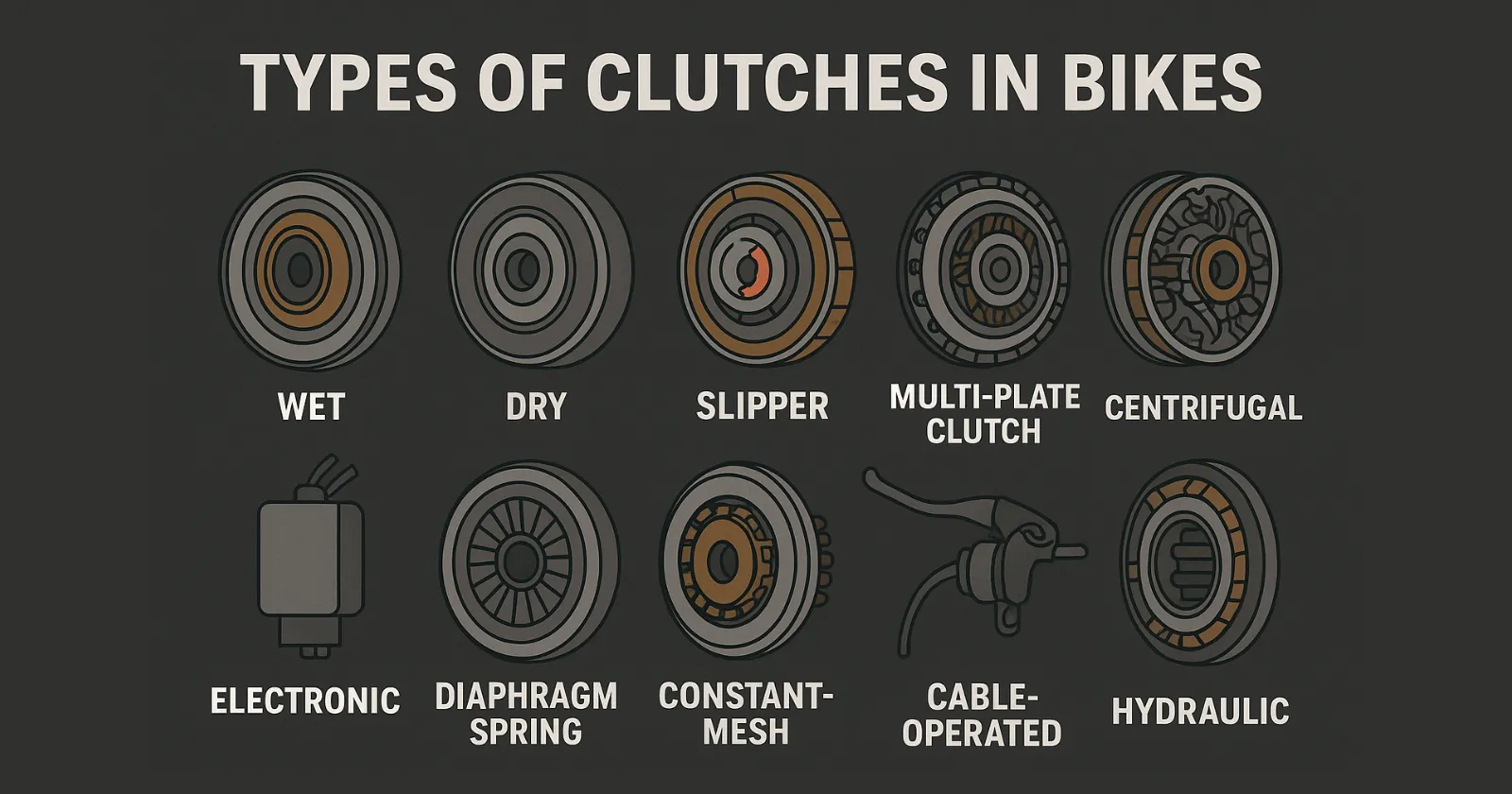
Types of Clutches in Bikes
There are mainly two types of clutches: wet and dry, with each differing in its functioning. However, we will discuss the standard clutch options found in motorcycles today.
1. Wet Clutch
As the name suggests, a wet clutch uses the engine oil bath for lubrication and smooth operation. This oil is always used to cool down the clutch plate, resulting in dissipation of heat and minimising wear.
Used in: Road bikes, commonly used for urban commuting
- Pros:
- Long-term performance
- Efficiency
- Minimal wear and tear
- No loss of power or friction
- Quiet operation
- Cons:
- Fluid drag results in the engine’s power depletion
- Needs clean oil for optimal performance
2. Dry Clutch
A dry clutch is found outside the bike’s case and doesn’t require oil for lubrication or cooling. It offers a quick power charge, making the clutch system suitable for off-roading adventures.
Used in: Race bikes
- Pros:
- Quick power delivery
- Easy service
- Lightweight
- Cons:
- Noisier in operations
- Quick wear due to a lack of lubrication
- Prone to overheating
3. Slipper Clutch
Also called the back-torque limiter clutch, this bike component is designed to perform aggressively in challenging situations and gear downshifting. The slipper clutch intercepts over-revving of the engine and slips partially till the engine speed matches the bike speed.
Used in: High-performance motorcycles
- Pros:
- Eliminates wheel lockup
- Performs effectively during emergencies
- Prevents unintentional downshifts
- Absorbs engine braking force
- Cons:
- Expensive compared to its alternatives
- Complex technology
4. Multi-Plate Clutch
A multi-plate clutch can be used as both wet and dry units, depending on your preference and requirement. It utilises multiple friction and interleaved driven plates, transmitting a high torque capacity.
Used in: Compact motorcycles
- Pros:
- Can transmit high torque
- Small compared to the basic single plate clutch
- Cons:
- Heavy construction
- Expensive
- Clutch engagement takes time
5. Centrifugal Clutch
An automatic clutch functions just like a Continuously Variable Transmission System. This clutch system operates by applying the centrifugal force upon the revolving mass. It is located between the transmission and engine shafts, with one end connected to the gearbox shaft and the other to the engine crankshaft.
Used in: Small bikes and scooters
- Pros:
- Simple and automatic operations
- Doesn’t keep the engine stalling
- Requires minimal maintenance
- Cons:
- Cannot transmit a strong force like its counterparts
- Prone to overheating
- Slips and friction result in power loss
6. Electronic Clutch
An electronic (E-Clutch) is a new system introduced by Honda to bring the best of both worlds. It maintains the traditional gear mechanism while automating the operation. The technology gives the rider the ability to shift between automatic and manual clutch control, depending on the situation and road type.
Used in: Honda’s E-Clutch variants
- Pros:
- Easy gear shifting
- Balance between manual and automatic clutch control
- Convenient for riders with hand strength issues
- Cons:
- Complex and heavyweight
- Possibility of a failure
7. Diaphragm Spring Clutch
This clutch utilises a single diaphragm spring for clamping pressure, providing a greater force than coil springs. The spring clamps onto the clutch plates. This function promises efficient performance and equal pressure distribution.
Used in: Heavy-duty motorcycles
- Pros:
- Compact and lightweight design
- Consistent pressure and smooth operations
- Functions like a release lever and a clamping spring
- Cons:
- Costly to replace the coil spring
- Complicated design
8. Constant-Mesh Clutch
The clutch arranges all gears in a net so that the biker can shift gears quickly and seamlessly. This speediness improves the biking experience and is primarily found in advanced vehicles.
Used in: Modern bikes that employ advanced fuel systems
- Pros:
- Quick and seamless gear shift
- Minimal wear and tear
- Cons:
- Complex and expensive to repair
9. Cable-Operated Clutch
A cable-operated clutch is one of the oldest systems in the bike industry. It connects to the clutch pedal and uses the clutch release mechanism for engagement and disengagement.
Used in: Older bike models
- Pros:
- Cheap to purchase and maintain
- Easy adjustability and a customised feel
- Cons:
- Unresponsive at times
- Cannot be adjusted
10. Hydraulic Clutch
A hydraulic clutch uses oil for smooth and minimal-effort operations. It draws oil from the fluid reservoir connected to the clutch lever. When a rider pulls the lever, the fluid flows through the hydraulic system and reaches the slave cylinder for disengagement.
Used in: Heavy-duty touring bikes
- Pros:
- Light pull and easy use
- Self-adjusting to minimise wear and tear
- Requires less frequent maintenance
- Cons:
- Higher initial cost
- A complex mechanism leads to costly maintenance
11. Coil Spring Clutch
This clutch system operates on more than one coil spring to release the tension and improve engagement. The springs are located between the diaphragm, so the clutch can easily connect and disconnect during gear shift.
Used in: Road bikes
- Pros:
- Consistent performance
- Common choice for general bikes
- Cons:
- Requires frequent maintenance
- Unsuitable for high-performance usage
Components of a Clutch in a Bike
A clutch operates smoothly with the help of the following components:
Clutch Basket
The gear assembly is located inside a rotating cylinder known as the clutch basket. This component is commonly made of steel and constantly revolves along with the engine during the engagement. Its exterior has a tooth-like structure that helps with the spinning movement.
Clutch Lever
The lever is used to engage and disengage the clutch and is on the left side of the bike’s handlebars. It allows a rider to handle the clutch for speed control.
Clutch Plates
A bike’s clutch plate is of two types:
- Friction Plate: These flat discs effectively grip the steel plates. The friction plates are made from fibre and are placed in alternate positions with the other plates. They are also called drive plates.
- Steel Plate: These flat discs shift rotational force from the engine to the transmission system. The metallic plates are smooth and durable and are also referred to as driven plates.
Pressure Plates
The plates are responsible for the engagement and disengagement of the clutch system. Once you pull the lever, the pressure plate disengages the clutch plates, temporarily breaking the power coming from the engine.
Clutch Cable
The cable connects the bike’s lever to its clutch assembly for smooth operation.
How Does the Clutch in a Bike Work?
The clutch mechanism works in two parts:
Engagement
When you release the bike’s lever, the pressure plate presses the friction plates against the basket and steel plates. This action causes friction, and the engine shifts power from the steel plates to the real wheel for operation.
Disengagement
When you pull the bike’s lever, the cable releases the force on the friction plates and disconnects from the pressure plate. This action connects the engine to the power transmission, giving you the flexibility to shift gears or stop the bike.
Wet vs Dry Clutch: Detailed Comparison
Although we have provided a detailed guide on the types of clutches in bikes, two of the commonly used clutches are wet and dry.
The table below helps you understand how exactly the two differ from each other:
| Features | Wet Clutch | Dry Clutch |
| Oil Presence | Oil bathing to maintain optimal temperature | Doesn’t have oil covering, runs independently |
| Design | More plates pressed together | A few plates, however, with a high coefficient of friction |
| Noise Level | Lubrication eliminates the noise | Loud rattling sound |
| Riding Condition | City roads with heavy traffic | High-speed riding |
| Service | Doesn’t require frequent servicing | Needs regular maintenance due to oilless friction |
| Dust Accumulation | Less dirt and dust due to the presence of engine oil | Get dirty easily and should be kept away from moisture |
| Performance | Can withstand the rigours of everyday use | Prone to wear and tear |
Which Clutch Type is Best for You?
Choosing the right clutch for a bike depends on your purpose and preference. Here is how different clutches suit varied conditions:
City Traffic Navigation
Wet clutches are the ideal choice for everyday commuting, primarily through stop-and-go traffic.
Long Rides
If you desire comfort during long journeys, hydraulic clutches are ideal to minimise hand fatigue.
Off-roading
Slipper and multi-plate clutches are suitable for adventurers as they offer quick gear shifting.
Vintage Feeling
Choose a cable-clutch bike if you want to experience an authentic ride.
Begin with a Moped or a Scooter
A centrifugal clutch is the right choice if you are just starting your biking journey.
How to Maintain Your Bike's Clutch
A healthy clutch system is crucial for maintaining your bike's optimal running condition. Here are some of the tips to enhance the longevity of the clutch in a motorcycle:
- Avoid keeping your clutch partially engaged for long durations
- Practice smooth and timely gear shifting
- Ensure the timely maintenance of your bike to keep the clutch in perfect condition
- In case of slippage, let an expert mechanic examine the bike’s clutch assembly
- Refrain from unnecessarily pressing your clutch lever
Frequently Asked Questions