With a turbo finally available on the Renault Triber, can it finally change the perception of this slow MPV? We find out.
Seven seats under four metres — that was, and still is the Renault Triber’s biggest USP. Over the past few years, the Triber has been one of the most innovative cars to come from the Indian auto sector, a true mark of clever engineering and packaging. But it’s been far from perfect. Seven years since its arrival then, Renault has finally brought the one thing everyone craved — more power! You see, with all three rows full, the Triber was slow off the mark. With a turbo-petrol now plonked under the bonnet, Renault wants to change that perception.
2026 Renault Triber Turbo: What’s New?
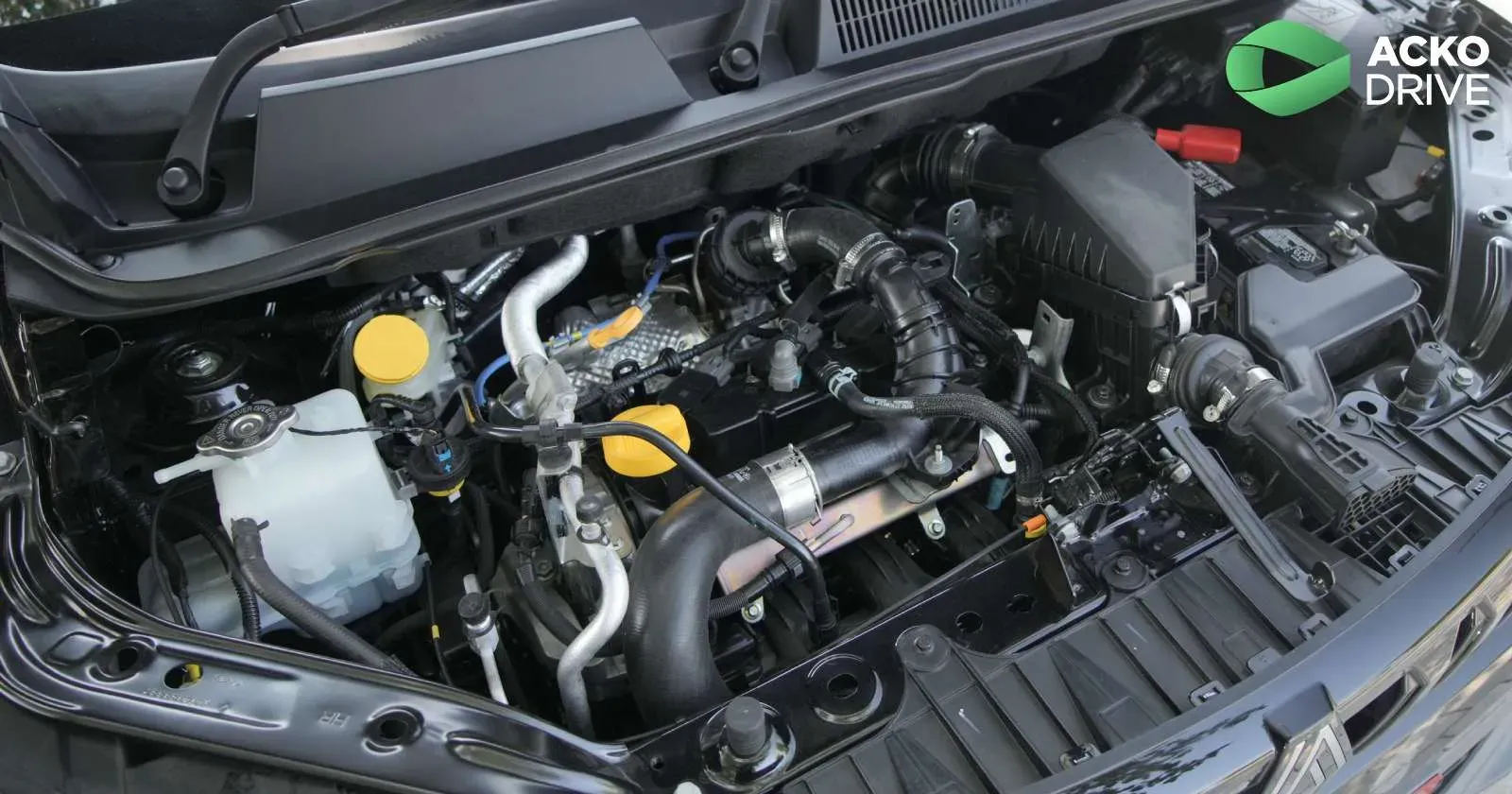
There were packaging limitations that stopped the carmaker from adding a turbocharged petrol engine in the first place. The original Triber was designed to squeeze every millimetre available for the cabin, which meant the engine bay was tightly packed. So, to fit a turbo, Renault had to resort to some extreme measures, such as re-engineering a new platform. The Renault Global Entry Platform (RGEP) now underpins the Triber Turbo. We first saw it earlier this year in Chennai, and it is a heavily modified version of the existing platform.
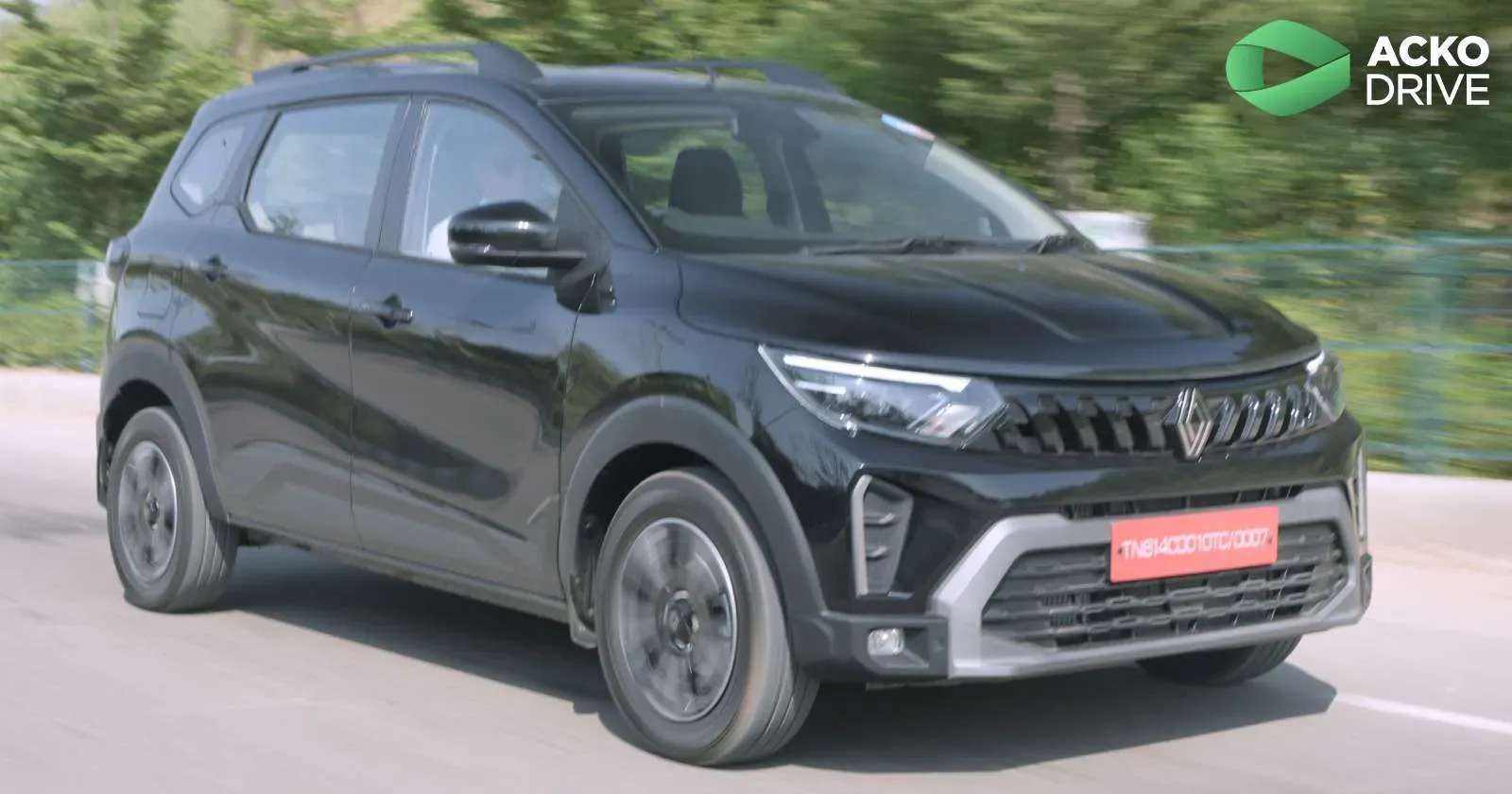
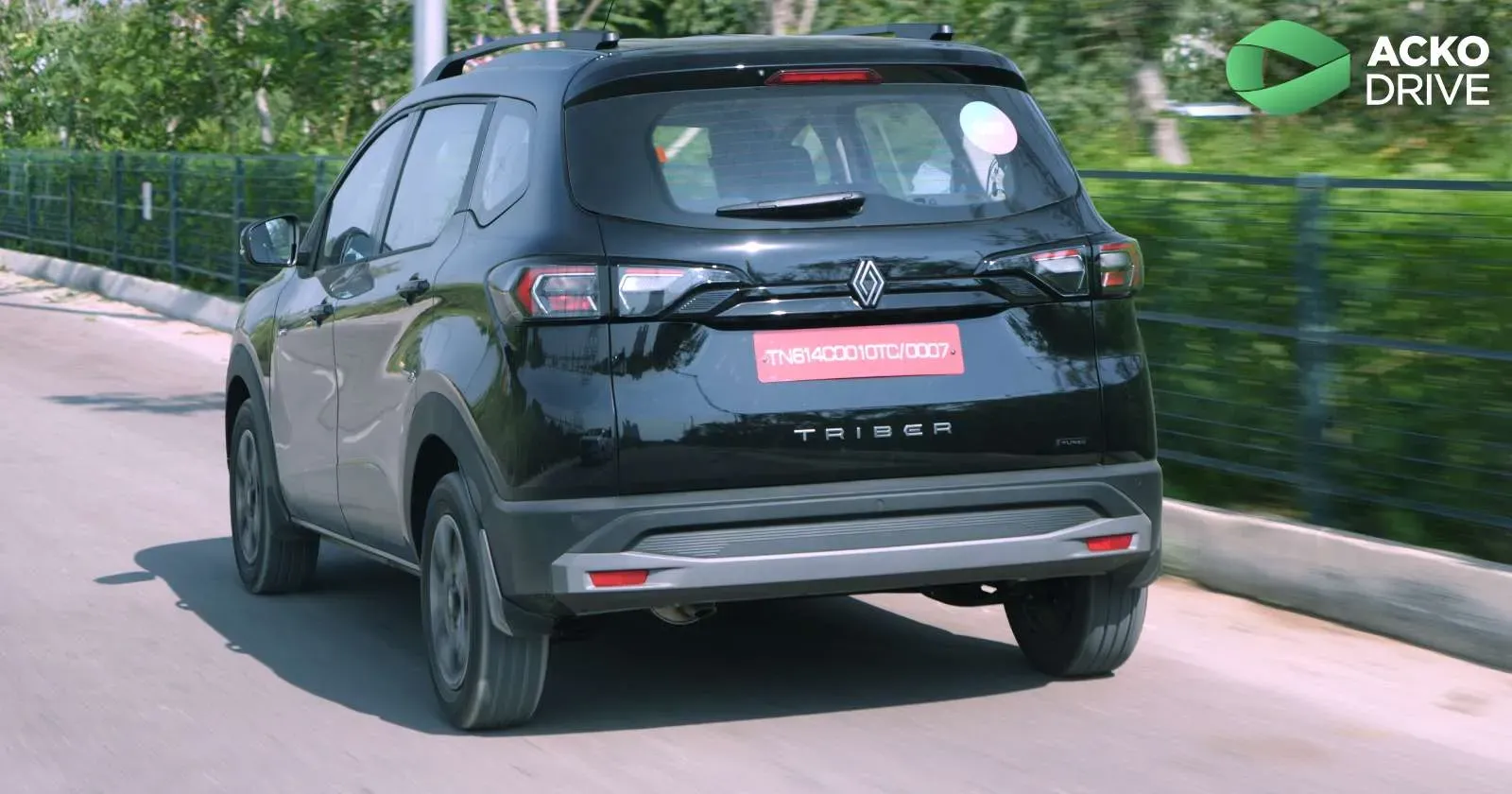
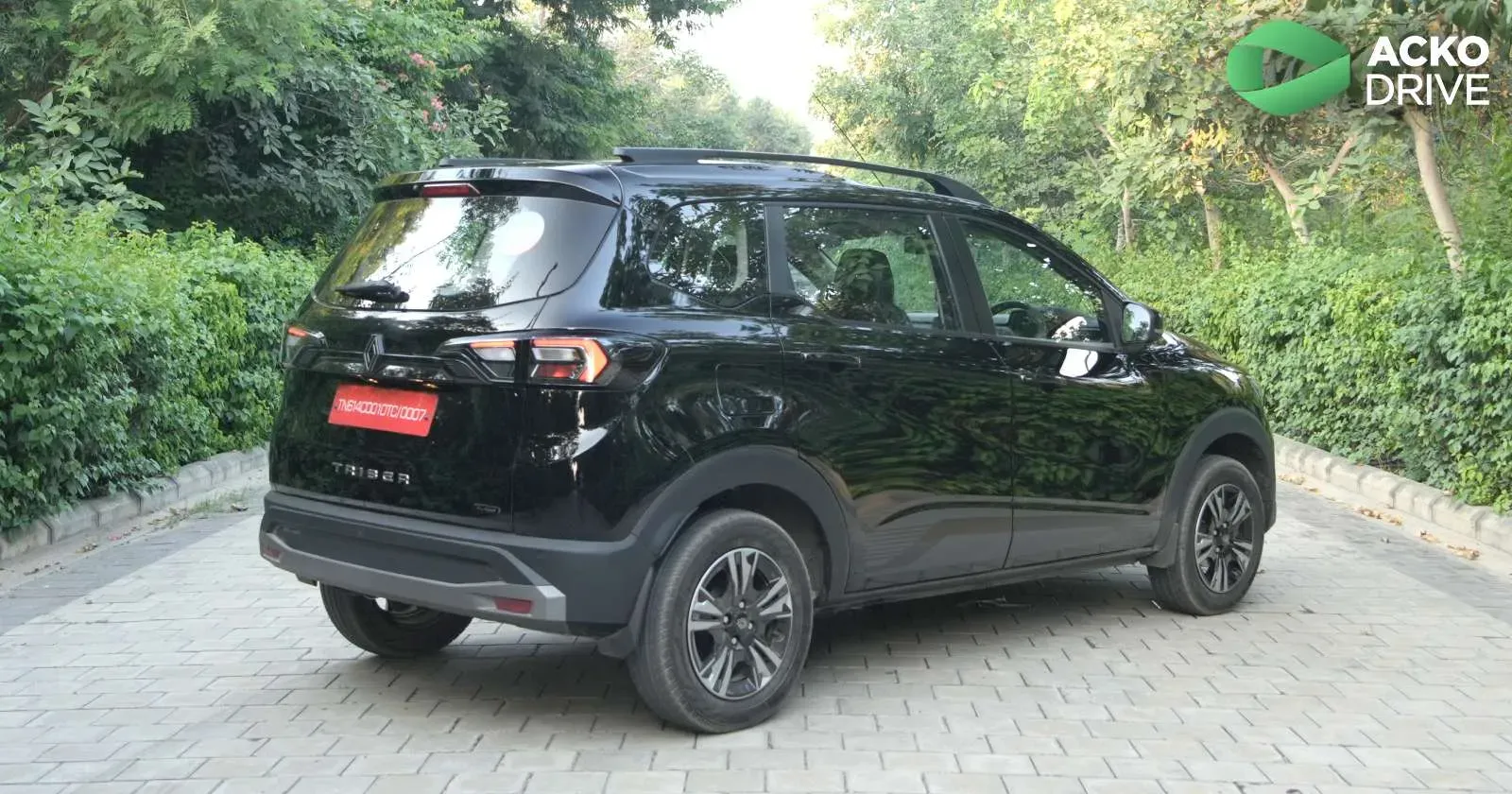
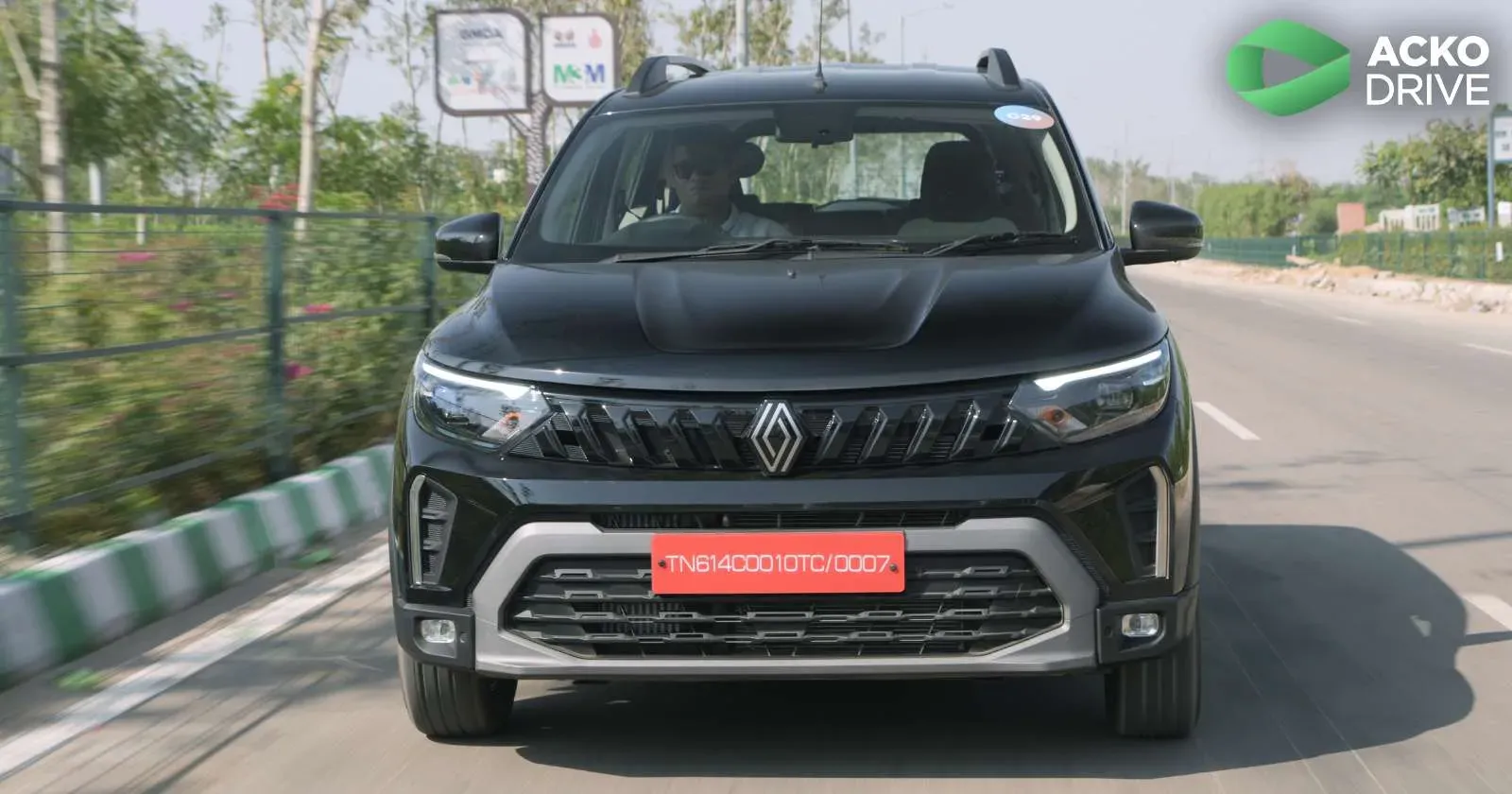
Visually, not a lot has changed on the Renault. It's still the same car, same design language, even the dimensions are the same. You do get a turbo badge on the tailgate because you now get a completely new engine bay with a new engine too. Renault has had to add more components to support the new engine, right from a turbocharger and new air intake system to a new engine management system. The RGEP architecture allows the automaker to package the engine and components as tightly as possible, without compromising on cabin space.
The additional power and torque have also warranted an improved BLDC fan cooling system, which is normally seen on hybrids and EVs. This essentially allows 35 per cent more airflow to critical parts, including the turbocharger, intercooler, and condenser. More components also mean more weight, and so the chassis had to be reinforced across several areas, including the A- and B-pillar. There are heat insulation materials as well under the bonnet and fire wall, compared to the regular Triber. Renault says it now uses 15 per cent more high tensile-strength steel in the construction of the Triber Turbo.
2026 Renault Triber Turbo: Performance
But do all of these changes help make the Triber go faster? Power figures have seen a massive jump over the 71 bhp and 96 Nm that the 1.0-litre naturally aspirated engine makes. The new 1.0-litre three-cylinder turbocharged petrol engine is from the Kiger, but heavily re-tuned to serve purpose on the Triber. Power output is the same at 99 bhp, but peak torque is up by 20 Nm at 180 Nm. The engine is paired only with a 5-speed gearbox for now. Renault says it factored in more luggage capacity, and a larger footprint with all three rows full to help the MPV move faster.
Power delivery is urgent. It is nice and wide across the rev band, but most of the power comes in after 2,000 RPM. You will feel the lag at the lower end of the rev band, especially in bumper-to-bumper traffic. You will have to work the gears a little to keep yourself in the power band. Especially at inclines, this will be a point of concern. But this is a properly quick car. The more powerful motor and the light body ensure that the new Triber is quick off the line. Zero - 100 kmph comes up in just 10.8 seconds. It feels properly fast.
Despite this quick performance, Renault claims fuel efficiency of 21 kmpl on the turbo variant, and while we saw single-digit figures during our short drive, we do intend to put this claim to test with all three rows full during a road test.
The mid-range is now stronger. You reach speeds of up to 80-90 kmph very quickly. You also cross the 100 km per hour mark very easily, and high-speed stability is better. When it comes to low-end tractability, you have to work the gears, and overtakes will need you to shift down a gear at times to keep the car in the power band. This is also quite an audible engine, especially at high speeds. The more the rpms climb, the more you hear everything inside the cabin.
2026 Renault Triber Turbo: Can It Climb A Hill?
One of the most common complaints on the Renault Triber was that it could not climb gradients, especially with all three rows up. But with the turbo, that problem should be resolved. More power, more torque. It’s now time to test that claim. It’s wiser to stick to the first gear because most of the power is available only after 2000 rpm, and you’ll have to keep the revs as high as 3000 rpm to make the climb smooth. The moment I drop it to second, power immediately tapers off. Is it better than the last version? Definitely. I think it's more responsive and easier to climb. But yes, you do still have to put in quite some effort.
2026 Renault Triber Turbo: Cabin
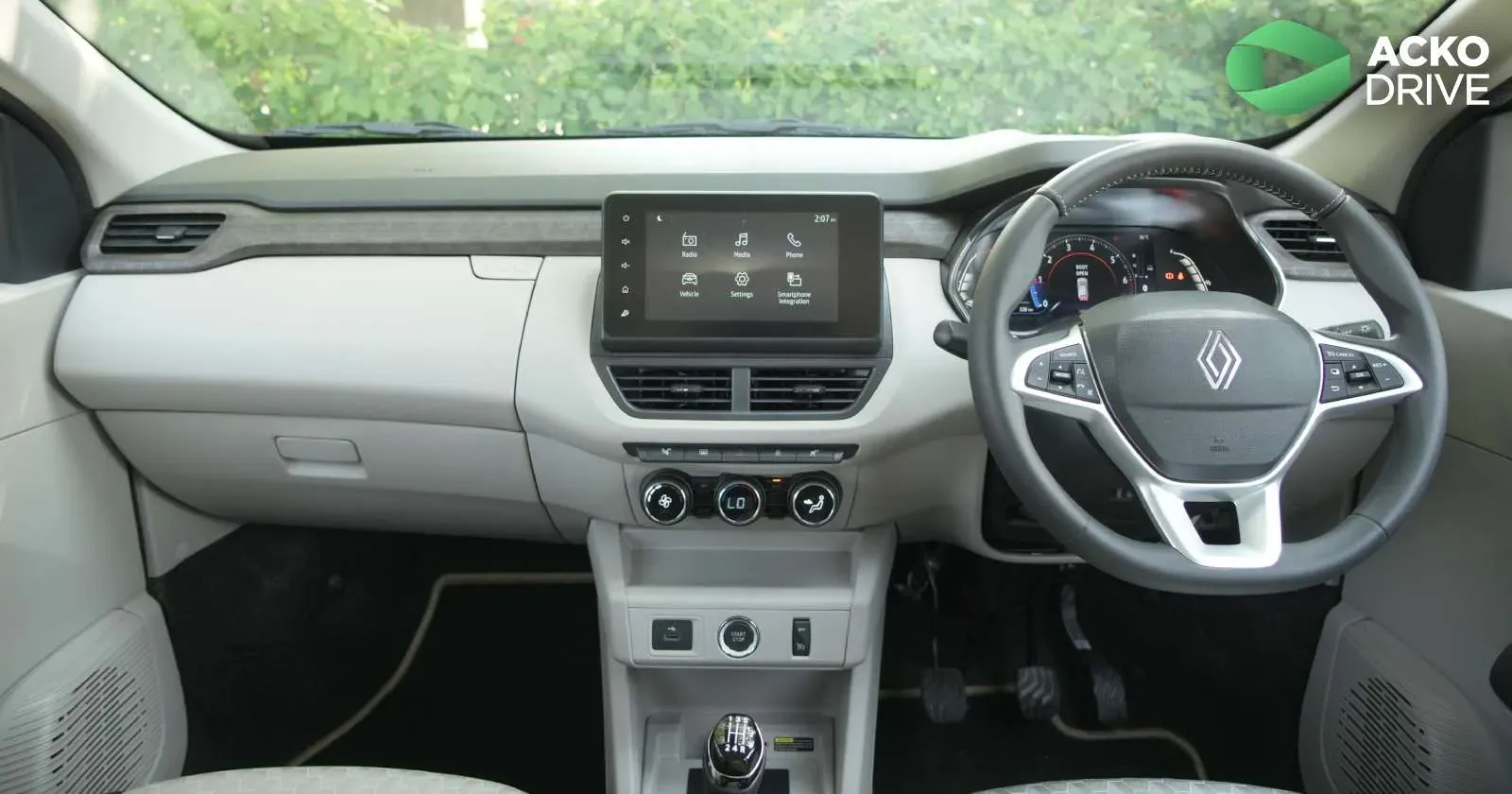
The cabin remains exactly the same with no change to the feature stack either. The tall stance ensures room, while you continue to get a digital instrument console, an 8-inch touchscreen infotainment system with wired Apple CarPlay and Android Auto, and automatic climate control. The cabin has a built-to-a-cost look but the plastics feel sturdy. The rear seats continue to be cleverly packaged with sliding and reclining functions in the middle row. The third row seats remain detachable so you can choose between flexible seating and massive cargo space.
2026 Renault Triber Turbo: Ride and Handling
There's more than just a new engine under the bonnet. The suspension and braking hardware have been upgraded as well to meet the enhanced power and torque figures. There’s a spring setup, better shock absorbers, and everything is a lot more sophisticated. The clunkiness that you had on the naturally aspirated version has gone away. This is a lot more refined, and the damping is a whole lot better. This almost feels like a different car. And you know the mechanical sounds that the older version made that have gone away with this version. The steering wheel is light, despite more mass at the front, making the Triber Turbo easy to manoeuvre, while the compact dimensions makes it easy to park in tight spaces.
The driving dynamics have also been changed thanks to the springs and the new shock absorbers and even anti-roll bars at the front and rear. This one handles better around a corner. It's still not a corner carver, but the body roll is very well contained. You will find yourself being a little more confident at high speeds.
2026 Renault Triber Turbo: Braking and Safety
Braking has seen sharp improvement. It’s more sure-footed, and the MPV comes to a halt with ease. Renault has re-tuned the ABS, traction control and Vehicle Dynamic Control functions to account for the additional power. In terms of safety, the Triber Turbo gets six airbags as standard across all trims. It is yet to be tested under the Bharat NCAP crash test norms though.
2026 Renault Triber Turbo: Old & New Triber Co-Exist
There will be two versions of the Triber on sale going forward. One will be the CMF-A based naturally aspirated version. The other one will be a new turbocharged one based on the RGEP. This, of course, is more advanced, structurally sound, and future-ready too. That one will continue with the existing setup. No changes will be made there. Instead, the new platform will make way for other variants of the Triber including a turbo-CVT, as well as a factory-fitted turbo-CNG, both of which are slated to arrive in 2027.
2026 Renault Triber Turbo: Verdict
While the top hat may be all the same, this is a completely different Triber underneath. In fact, it would be nearly a new generation minus visual changes. It drives much better, the ride quality is a whole lot better, and the dynamics have improved. Renault still needs to work on improving the cabin quality, while the new platform promises to address the need for a turbo-automatic and CNG. Renault has done a good job with the new Triber Turbo, especially with prices remaining competitive between ₹7.84 lakh and ₹8.99 lakh (ex-showroom). It may not be perfect yet, but it’s a start nevertheless.
A petrolhead with a penchant for travelling far and wide, I like my wheels - two and four - and sometimes even more. When not behind the wheel, you'll find behind the dining table gorging on some delicious cuisines.