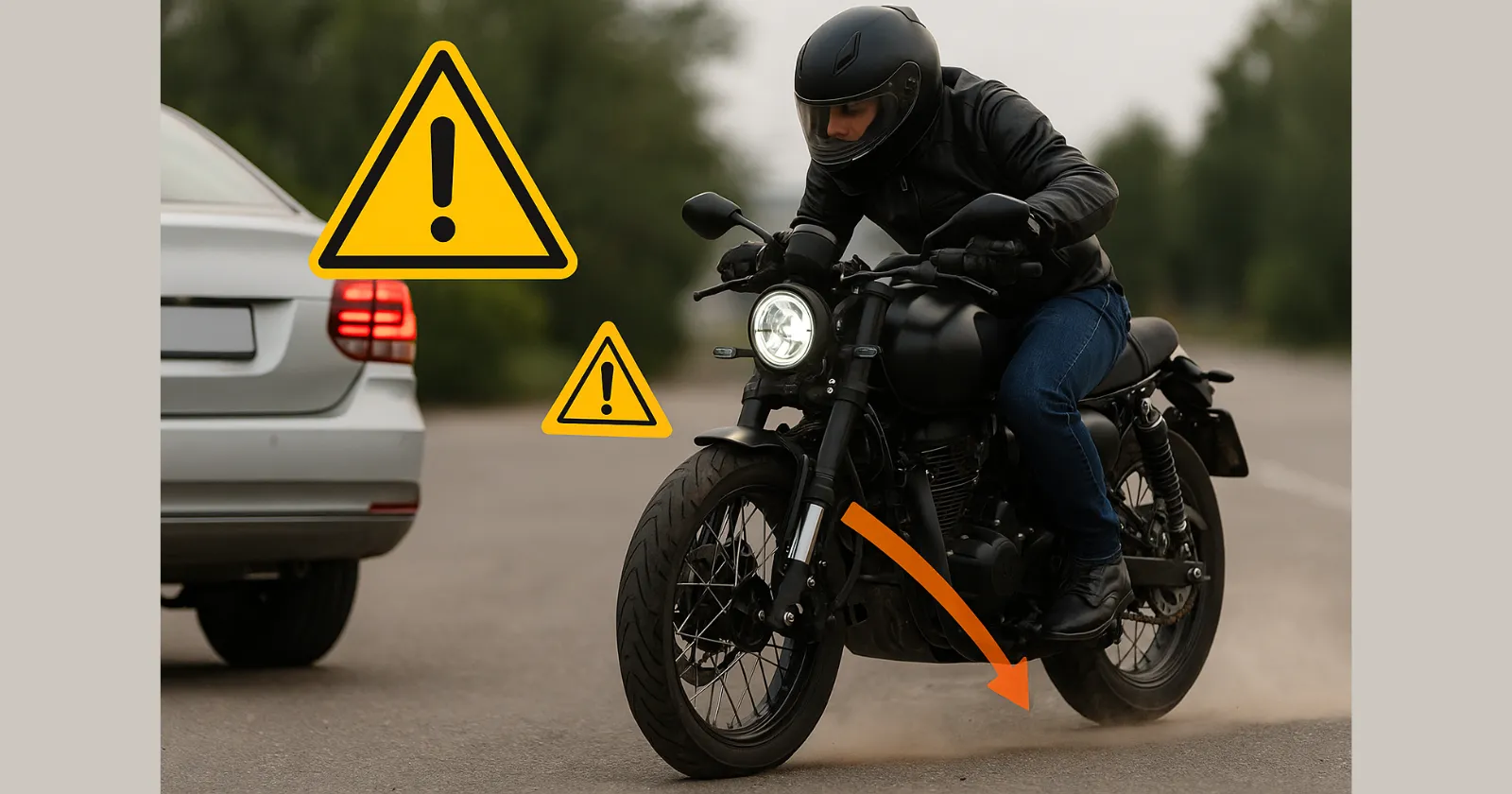
What is Panic Braking in Bikes?
Panic Braking is when a rider or driver suddenly presses the brakes very hard out of fear or in an emergency, usually to avoid hitting something. It often happens when you are surprised, like when a person or vehicle suddenly comes in front of you.
While it can help stop the bike quickly, panic braking can also make the wheels skid if you brake too hard, especially without ABS. That’s why it’s important to practice controlled braking so you can stop safely without losing balance.
When to Use Panic Braking
Use panic braking only when it's necessary, such as:
- A car or bus cuts in front of you with no gap.
- A pedestrian or animal suddenly steps onto the road.
- A pothole or obstacle appears too close to miss.
Do not use panic braking every time you brake. Practice careful braking most of the time to avoid wearing out your brakes too soon.
How to Panic Brake Safely
Here’s a step-by-step guide for you.
1. Grip Both Brake Levers Firmly
For motorbikes, use firm pressure on the front brake lever (right hand) and the rear brake pedal (right foot) at the same time.
2. Do Not Lock the Wheels
If your brakes lock (the wheels stop turning), the bike slides and you lose control. Instead, pull the brakes gradually but firmly. Modern bikes with ABS help prevent wheel lockup automatically.
3. Stay Upright
You need to lean forward slightly and keep your body relaxed but firm. Make sure you do not lean to the side unless you have space and control.
4. Use Clutch When Needed
If you're riding a bike with a manual gearbox, then you should pull the clutch lever to prevent the engine from stalling. This will keep the engine running smoothly during the full stop.
5. Practice in a Safe Area
It is always the best idea to practice panic braking in an empty parking lot or quiet road at a low speed first. This will help build confidence and will also make you understand how the brakes respond in a safe environment.
Why Both Brakes Matter
Most of a bike’s stopping power comes from the front brake, but using only the front brake can make the bike tilt forward suddenly or even cause you to lose control. That’s why it’s vital to use both brakes together, the front and the rear.
Using both brakes shares the stopping force between the front and back wheels, which helps you stop faster without slipping or skidding. It also keeps the bike more stable, especially during sudden stops. If you only use the rear brake, the bike may not stop quickly enough, and if you only use the front brake too hard, there’s a chance of the front tyre sliding or the bike flipping forward.
So, remember to press both brakes smoothly at the same time. This gives you the safest and most controlled stop.
Panic Braking on Different Bikes
Not all bikes react the same way during sudden braking. The braking technique can change depending on whether your bike has ABS or not.
- On Bikes with ABS: ABS (Anti-lock Braking System) senses when wheels are about to lock and pulses the brake pressure quickly. This allows you to press harder without losing control.
- On Bikes without ABS: You need to be cautious and press the brakes firmly but steadily. Let up slightly if you feel a skid, then press again. This takes some practice to learn how to manage pressure smoothly.
Common Mistakes to Avoid
There is no doubt that even experienced riders make mistakes while braking. So, it is essential to avoid these small mistakes that can make a big difference in your safety.
Only using one brake
Relying only on the front or rear brake can reduce your stopping power. Always use both brakes together for better control.
Pulling the brake too suddenly
Jamming the brake lever can lock the wheels and cause a skid. That is why it is important to apply the brakes smoothly but firmly.
Looking down
When you look down at your brakes, you immediately lose focus on the road. So, always keep your eyes straight and look where you want to go.
Braking in curves
Braking hard while turning can make your tyres lose grip. Try to slow down before entering a turn.
Riding with bad tyres
Old or worn-out tyres cannot properly grip the road, making it harder to stop quickly, especially in the rain or on gravel.
Tips to Improve Braking Skills
Here are some quick tips that will help you improve your braking skills.
- Check tyre pressure regularly. Low air pressure makes the bike wobbly and harder to stop.
- Brake pads and fluids wear out over time. Get them checked and replaced when needed to avoid brake failure.
- Always leave enough space from the vehicle ahead. Keep scanning the road for sudden stops or surprises.
What to Do After Panic Braking
Panic braking can be stressful, but what you do right after it is just as important as the braking itself. Staying calm and checking your surroundings helps you stay safe.
- Once you’ve stopped, make sure your bike is stable and you haven’t lost control. If necessary, put both feet down to steady yourself.
- If your heart is racing, take a deep breath before moving again. Don’t rush back into traffic while you’re still shaken.
- Check traffic behind and beside you before continuing. Be sure the road is clear and it’s safe to move.
- If the bike skidded or made any unusual sound, check your tyres, brakes, and handlebar position. If something feels off, ride slowly to a mechanic.
These simple steps help you stay in control and avoid further danger after a panic stop.
How to Avoid Panic Braking
The best way to deal with panic braking is to avoid getting into a situation where you need it. Follow these tips to avoid panic braking.
Maintain a safe following distance from vehicles ahead
Always keep enough space between your bike and the vehicle in front. This gives you more time to react if they stop suddenly.
Scan the road well ahead to spot hazards early
Keep your eyes moving and look far ahead, not just right in front of the bike. You’ll see traffic changes, potholes, or animals early and have time to slow down safely.
Ride smoothly with gradual acceleration and deceleration
Avoid sudden speed changes. Smooth riding keeps your tyres gripping the road better and prevents surprises that lead to panic braking.
Stay alert: Watch pedestrian crossings, bus stops, and junctions carefully
These are places where people or vehicles may appear unexpectedly. Slowing down near them helps you stay prepared to brake calmly if needed.
Final Words
Panic braking is a skill every rider needs to handle. If used correctly, it allows you to stop safely in sudden situations. Practice in safe areas, use both brakes, and ride with awareness of road conditions. While you hope not to rely on it often, being prepared with effective braking skills can make riding safer and give you the confidence to handle emergencies calmly.
Frequently Asked Questions