
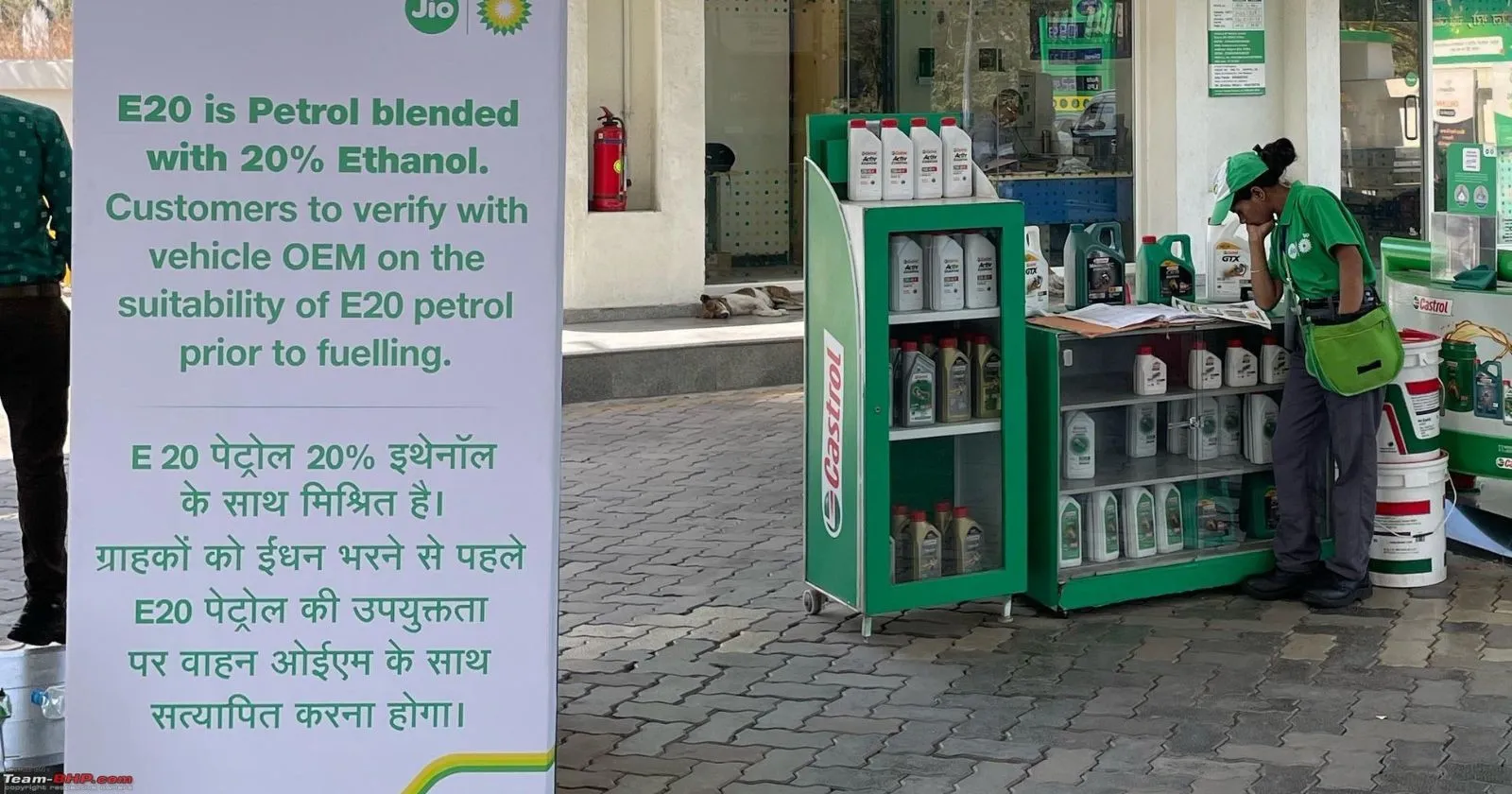
One of the biggest controversies of the year, affecting crores of vehicle owners in India, was the sudden mandate to sell and use only E20 ethanol-blended petrol.


Share Post
One of the biggest controversies of the year, affecting crores of vehicle owners in India, was the sudden mandate to sell and use only E20 ethanol-blended petrol.

From major car and bike launches to massive shifts in government policy and huge international geopolitical events, 2025 has been an eventful year, and its effects will resonate for a long time. Are things better for motorists in India now than they were a year ago? In many ways yes, but we’ve also seen the foundations for some major disruptions that are likely to reshape the automotive landscape here over at least the next decade.
Here are the ten biggest and most important news developments in the automobile industry in India in 2025:
Perhaps the most important story of all this year, the government of India’s sudden announcement that all petrol available in the country will have to be blended with Ethanol by no less than 20 percent caught car and bike owners off guard. Older vehicles aren’t necessarily suited to the altered chemical composition of E20 fuel, resulting in potentially increased wear and tear on components. Mileage also dropped significantly in some cases, and people did not hesitate to make their dissatisfaction known online. Vehicle manufacturers were also not adequately prepared to answer questions about which models are affected, and how warranties will be honoured. Lowering fuel prices might have helped ease the shock for consumers, but that didn’t happen.
However, the Government has stuck to its guns, claiming that Ethanol blending helps reduce India’s reliance on imported oil and is more eco-friendly. The Supreme Court dismissed a PIL challenging the sudden switch, so it looks like E20 is here to stay – at least until we’re forced to move to even higher percentage blends.
Where consumers did celebrate was the huge GST rate cut, timed strategically to hit right as the festive buying season commenced. Manufacturers across the spectrum committed to passing on the full benefits of tax cuts to buyers, and prices falling by multiple lakhs in some cases, it was a bonanza.
Automobile retail in India grew by a staggering 40.5 percent year-on-year in October 2025, with 40.23 lakh units sold — the highest-ever monthly figure on record. Of those, 31.49 lakh were bikes. Hyundai Motor India reported its strongest single-day performance in five years with around 11,000 bookings, and Maruti Suzuki announced it had registered over 4,00,000 bookings in the four-week festive period.
For entry-level vehicles like the Maruti Alto K10, buyers saw price reductions of ₹50,000–1,00,000 or 10–20 percent, depending on variant. On the luxury side, people were able to save up to ₹10,00,000.
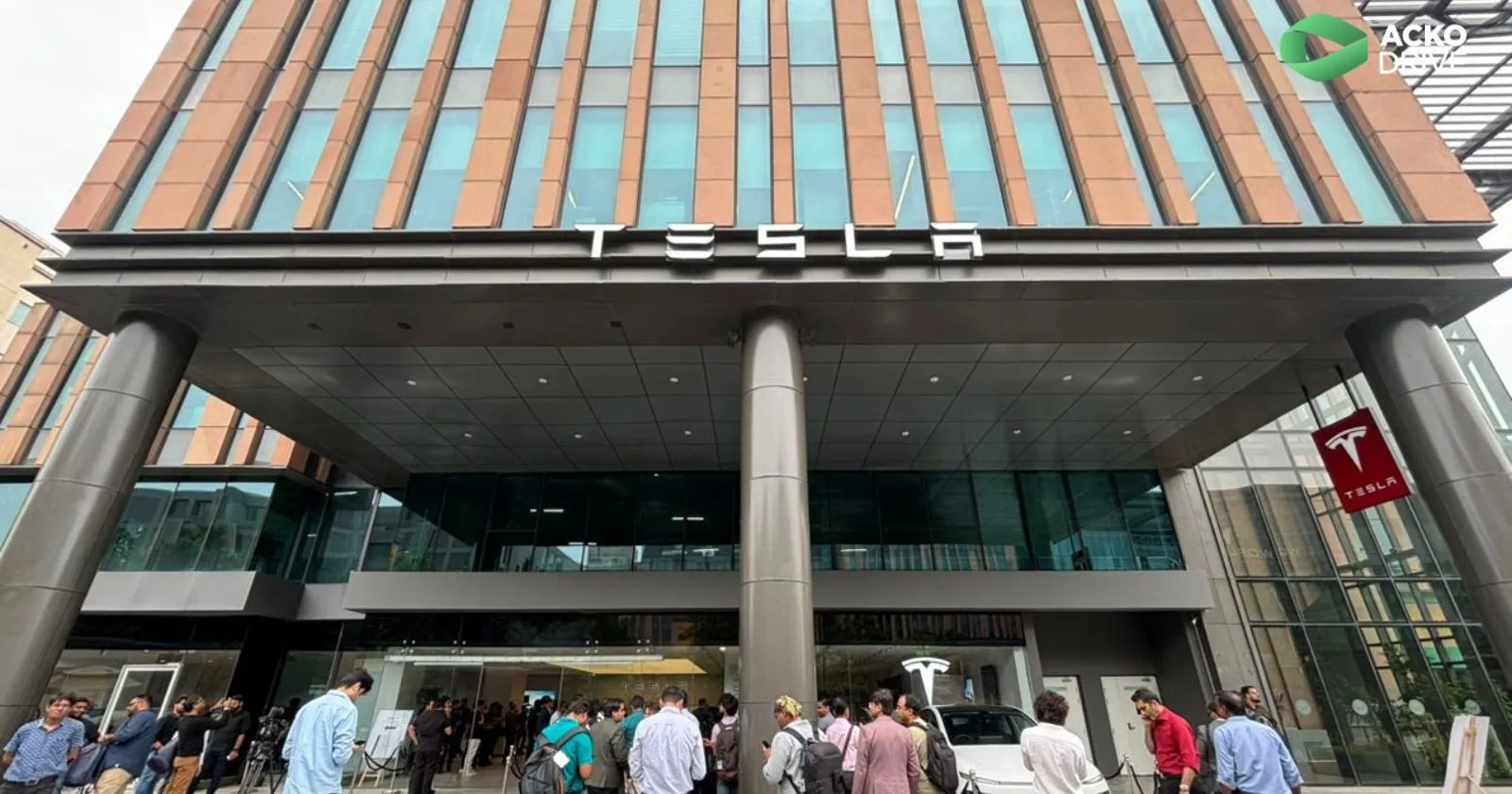
Multiple major new players entered India this year, with even more confirmed to be coming soon. The biggest one of course is Tesla, which had been promising a launch for years but hadn’t seemed to crack the formula till now. It doesn’t seem as though local manufacturing is on the cards, despite multiple reports suggesting tie-ups and other deals, which means prices for the Model Y are high and demand isn’t exactly on fire. However, Superchargers are now popping up and the company is still making major investments.
On the other hand Vinfast has set up a huge manufacturing plant for its electric SUVs. Already off to a strong start, parent company Vingroup has major plans for India, well beyond its car business.
ACKO Drive confirmed earlier this year that Hyundai’s Genesis brand is coming to India, along with Leapmotor from the Stellantis group. Kinetic, the much-loved brand from the 1980s and 1990s, has been reborn with the new electric DX scooter. And British marque Norton is confirmed for a 2026 launch, now that it is under the TVS umbrella.
Along with these new companies, several existing ones have expanded manufacturing operations. Vinfast has established its presence in just a short time. Toyota will open a new Bengaluru R&D centre and plant in 2026 and is finalising plans for another one in Maharashtra. Honda and Yamaha announced plans to use India as a major car manufacturing and export hub. Maruti Suzuki India is expanding its Haryana and Gujarat operations to cater to growing domestic and export demand. Tata Motors has invested in Tamil Nadu, and Mahindra is growing its Chakan, Maharashtra operations.
In the components segment, Corning, Harman, Magna, Tsuyo, Pioneer, and Uno Minda announced manufacturing and R&D investments in India this year. Ford’s southern India plant is set to reopen to manufacture engines. Hyundai took over GM’s former Talegaon plant to keep up with demand.
New vehicle export records were set this year, with SIAM announcing an all-time high of 31,43,224 exports of Made-in-India vehicles in 1H FY2025-26. An ACMA-McKinsey report pegged India’s component exports at $70 billion-$100 billion by FY 2030. The Maruti Suzuki e Vitara is being built here for the world, and the Jimny is even being exported to Suzuki’s home country, Japan. Despite new US tariffs causing some disruptions, exports of commercial vehicles and components have kept growing. Simultaneously, India has steadily reduced its dependence on imports.
In an attempt to address air pollution, the Government decided to ban cars more than 15 years old in Delhi, no matter what condition they were in. Lots of cars in good shape were caught in the chaos, and resale values tanked. The matter went before the Supreme Court of India, which restrained the government from taking coercive action. As of now, cars that meet Bharat Stage IV emissions norms have been given a reprieve, but not before many people sold or disposed of theirs. Commercial vehicles that do not use green fuels have also been targeted, and the Government is likely to impose ownership limits and a new cess on new ICE cars to encourage the adoption of EVs. Visitors driving into Delhi might have trouble if their cars are not compliant, fuel refills are being restricted, and we’re sure to see even more measures put into place in the new year.
As new CAFE 3 (Corporate Average Fuel Efficiency) norms are being readied by the Government, opinions in the industry are split, with domestic leaders Maruti Suzuki and Tata Motors taking opposite stances on the prospect of weight-based concessions. The outcome will have huge ramifications for the passenger vehicle market in India in 2026 and beyond, not just in terms of prices, but also safety, and market dynamics.
China decided to flex its muscles earlier this year, limiting its exports of rare earth materials that are essential to many manufacturing industries. Not only did this expose huge dependencies in global supply chains, but it also showed how India can do better at utilising its own resources. As multiple manufacturers including Bajaj and Royal Enfield were forced to pause production or remove certain features from models, Indian industry and diplomatic efforts to restore trade were unsuccessful for a long time.
The good news was that local industries pivoted quickly – the Government allocated ₹7,280 crore for establishing self-sufficiency in mining and refinery operations, plus ₹1,500 crore for recycling. Lohum opened a dedicated facility in UP, Simple Energy claimed to have developed India’s first rare-earth-free motor, Sona Comstar announced its own new motor and plans to set up local facilities, and Ola Electric received a government certification for its own ferrite motor. The disruption showed where there were new opportunities for the Indian manufacturing sector to shine.

Bharat NCAP announced 15 crash test results this year, while Global NCAP published seven reports under its Safer Cars for India initiative. Several high-profile models did very well, particularly the Maruti Suzuki Victoris which pulled off impressive five star ratings under both organisations' test processes.
Most of the results have been strong, with full five-star ratings also going to the Maruti Suzuki Dzire, e Vitara, and Invicto; the Tata Harrier EV and Altroz; Mahindra XEV 9e and BE 6; Kia Syros; Toyota Innova Hycross; and Škoda Kylaq. Sadly we’re ending the year with some bad news – very poor ratings for the Maruti Ciaz, Celerio, and Fronx.
BNCAP and some of its global counterparts also announced major improvements and expansions to their test protocols, which will be effective soon. Announcements of NCAP star ratings at launch are becoming an important marketing tool, and consumer awareness is growing. Models that aren’t tested now stand out in their segments. Hopefully, manufacturers will continue to support independent safety testing.
This one was great news for frequent road-trippers. You can now save a significant amount of money if you use eligible national highways a lot. The announcement early this year was massively hyped, and its formal launch on August 15 was a huge success with 25 lakh subscribers and 5.67 crore transactions recorded in its first two months. Toll operators will receive compensation totalling up to ₹4,500 crore, which shows how much money drivers are saving. However there are lots of exemptions – major roads including the Yamuna Expressway, Mumbai-Pune Expressway, and state highways aren’t covered. The pass is also only for private passenger cars. On a related note, the much-talked-about satellite-based toll tracking system has not yet been rolled out.
A massive-scale targeted cybersecurity incident took Jaguar Land Rover’s global manufacturing and business operations systems worldwide offline for a month, causing a loss of nearly £2 billion. Not only did this disrupt production and sales, but thousands of employees were also left uncertain about their futures, and multiple components suppliers, as well as the entire distribution network was affected. We don’t yet have a full picture of what happened and how, as investigations are still on, but business seems to have resumed at least partially.
The issue reached the UK’s parliament, where a government bailout was discussed. Meanwhile, companies around the world have been scrambling to prevent similar attacks.
Jaguar’s own massively-hyped reinvention, with an all-new design language and positioning, has also been delayed – but in separate news, management upheaval and general public outcry might result in some changes to that plan. Stay tuned in 2026!

TVS Becomes Third-Largest Two-Wheeler Manufacturer in the World
Acko Drive Team 4 Mar, 2026, 12:41 PM IST
5 Interesting Colour Options On Indian Cars
Acko Drive Team 4 Mar, 2026, 12:30 PM IST
Actor Shahid Kapoor Brings Home Mercedes-Benz G 450d Worth ₹2.9 crore
Acko Drive Team 4 Mar, 2026, 10:20 AM IST
Volvo Brings New UX to 2.5 Million Older Cars With its “Largest OTA Software Update Ever”
Acko Drive Team 4 Mar, 2026, 9:27 AM IST
Renault Teases Bridger Subcompact SUV Concept To Take On Hyundai Venue, Will Be Made In India
Acko Drive Team 4 Mar, 2026, 8:52 AM IST

Looking for a new car?
We promise the best car deals and earliest delivery!
